Beyond the Buzzwords: Mastering Your Value Proposition Communication

Why Learning to Communicate Value Proposition Is Essential
To communicate value proposition effectively, you need to do more than describe what your product does. A value proposition is a clear statement that explains how your offering solves a customer’s problem, delivers specific benefits, and stands apart from competitors. Here’s what matters most:
- Start with the customer’s problem, not your product’s features
- Use simple, outcome focused language that avoids jargon and buzzwords
- Be specific and credible by backing up claims with proof points
- Ensure consistency across all marketing, sales, and customer touchpoints
- Test and refine your message based on real customer feedback and conversion data
Many B2B companies struggle to articulate their value clearly. They know their offering is valuable, but that understanding doesn’t always translate into messaging that resonates with buyers. The result is longer sales cycles, inconsistent messaging across teams, and lost opportunities to customers who simply don’t understand why they should choose us.
The problem isn’t a lack of value. It’s a lack of clarity.
A strong value proposition does more than inform. It shapes how customers perceive your brand, guides your marketing and sales efforts, and ultimately drives revenue growth. According to research, companies that fail to convincingly convey their unique benefits see diminished consumer interest, decreased profitability, and potential loss of market share.
This guide will walk you through the complete process of building and communicating a value proposition that actually works. You’ll learn how to identify what makes your offering unique, craft messaging that resonates with your target audience, and use the right formats and channels to ensure your value is impossible to ignore.
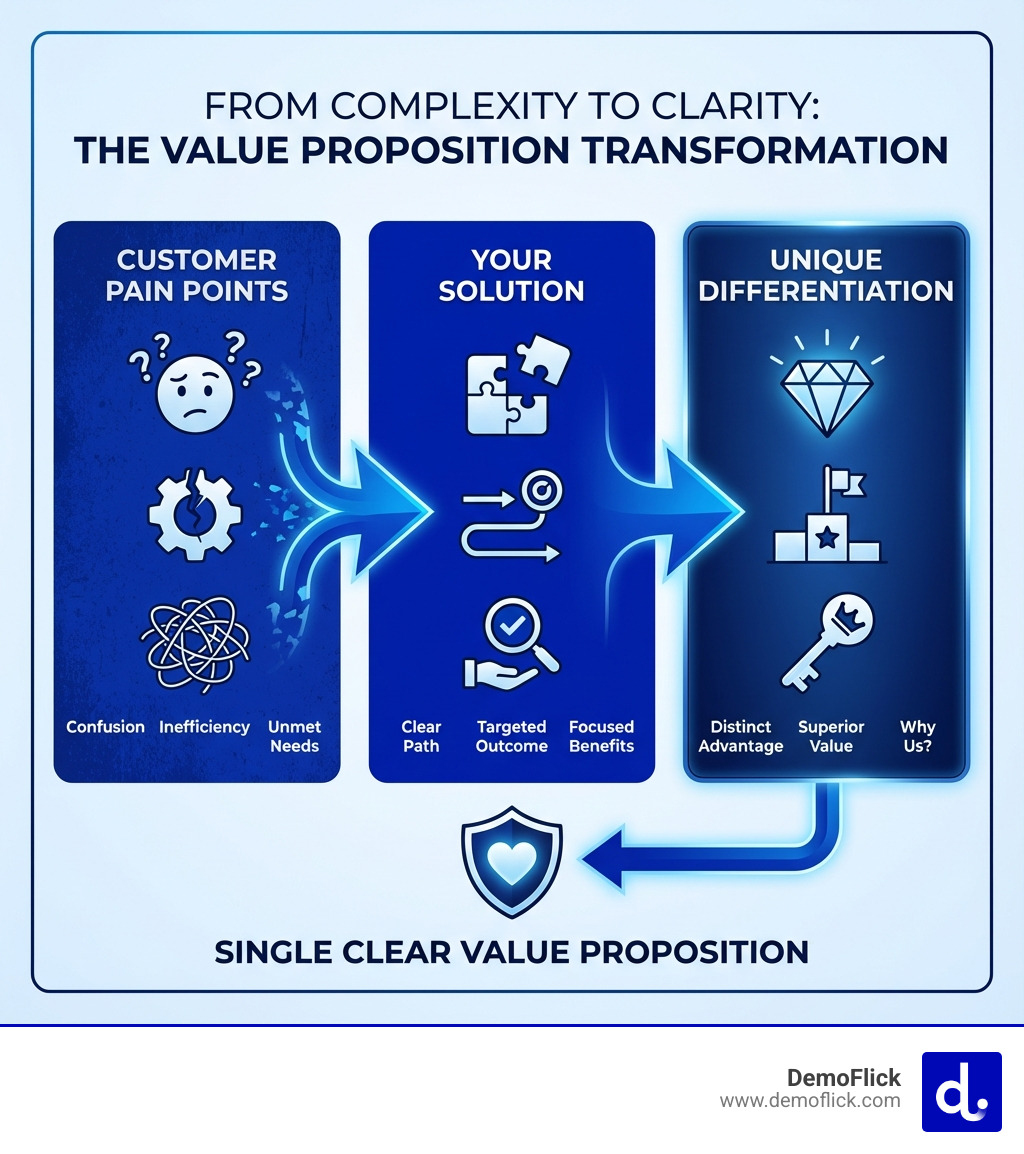
First, Define Your Value: The Foundation of Clear Communication
A value proposition is the cornerstone of any successful business. It’s a clear, concise statement that tells potential customers why they should choose your product or service over any other option. Think of it as our promise to the market, summarizing the unique benefits we offer and how we solve specific customer problems.
This statement is vital for our business because it directly impacts market share, investor confidence, and customer interest. A weak or unconvincing value proposition can make it difficult to attract investment and consumer demand, potentially leading to diminished interest and loss of market share. It helps us focus our marketing efforts on the unique benefit to customers, ensuring our offering is centered on their needs.
What is a Value Proposition (and What It Isn’t)
At its heart, a value proposition is a marketing statement that summarizes why a consumer should buy our product or use our service. It should convince a potential consumer that our offering will add more value or better solve a problem than other similar offerings. Our value proposition needs to simply answer the question: Why should someone buy what we are offering? This question has three components: Who is the target buyer? What is the offering in the context of that buyer? And why is our offering uniquely valuable to that buyer?
It’s easy to confuse a value proposition with other common business statements. While related, they serve distinct purposes.
- Value Proposition: This is our promise to the customer, focusing on the specific benefits they gain and how we solve their problems better than anyone else. It’s about the “what” and “how” for the customer.
- Positioning Statement: This defines how we want to be perceived in the market relative to competitors. It clarifies our unique place in the target market’s mind. While the value proposition is customer facing, the positioning statement is often an internal guide for our marketing, branding, and creative teams.
- Mission Statement: This explains our company’s overall purpose, values, and long term goals. It’s our “why,” appealing to internal employees and stakeholders, and broadly to the public.
To help clarify these distinctions, here’s a table comparing them:
| Feature | Value Proposition | Positioning Statement -|
| Audience | Target Customers | Internal Teams (Marketing, Sales, Product) -|
| Purpose | To convince a customer to buy, focusing on the unique, tangible benefits they will receive. -|\h| To guide internal strategy and define how the brand is perceived against competitors. …
The public, stakeholders, and employees -|
| Focus | External: What the customer gets. -|
| Internal: How we want to be perceived. -|
| Internal & External: Why the company exists. -|
The Core Components of a Powerful Value Statement
Our research indicates that the best value propositions are clear, specific, and customer focused. They emphasize outcomes, not just features. To achieve this, a powerful value statement needs these core components:
- Relevance: It must clearly address a problem our target audience faces or a desire they have. Value isn’t about what we do; it’s about what our customer can achieve because of what we do. This shift in perspective makes all the difference.
- Quantified Value: Whenever possible, we should highlight specific, measurable outcomes or benefits. Instead of saying “our platform is fast,” we might say “our platform increases ad revenue by 50%.” This specificity helps customers understand the tangible impact.
- Unique Differentiation: Our value proposition must clearly state what makes us different and better than alternatives, including simply doing nothing. This means identifying our unique selling points (USPs) and communicating what our brand offers that competitors do not.
- Clear Structure: An effective value proposition often includes a strong headline that grabs attention (since 8 out of 10 people read only the headline), followed by a subheadline that expands on the delivered benefit. Bullet points can highlight key features, but the focus remains on benefits.
Customers don’t buy features; they buy solutions to their problems and the benefits those solutions provide. Our communication should always emphasize outcomes over raw technical specifications.
Why Your Ability to Communicate Value Proposition Matters for Growth
Our ability to communicate value proposition is not just a marketing luxury; it’s a fundamental driver of business growth and survival. A strong value proposition is essential to succeeding in today’s fiercely competitive business environment.
- Customer Focus: It forces us to view our offering through the customer’s lens, ensuring our product or service genuinely addresses their challenges and aspirations. Value isn’t about what we do; it’s about what our customer can achieve because of what we do.
- Focused Marketing Efforts: A clear value proposition acts as a compass for all our marketing and sales activities. It focuses our efforts on the unique benefit to customers, helping us create messages that resonate directly with our target market.
- Competitive Advantage: In a crowded market, our value proposition is what sets us apart. It highlights our unique offerings and explains why customers should choose us over others. This helps maintain our “economic moat,” a term coined by Warren Buffett to describe a company’s competitive advantage.
- Profitability and Investment: If we cannot convince stakeholders, investors, or customers that our company or its products are worthwhile, it will be difficult to attract investment and consumer demand. A strong value proposition is crucial for sustained profitability and growth.
- Brand Authority: Consistently articulating our unique value builds trust and credibility in the market. It positions us as an authority, making our brand more recognizable and reliable. As a B2B video production company, we understand that clarity is a business advantage, and our value proposition embodies that principle.
A strong value proposition shows what a brand offers that competitors do not, and how it meets a unique customer need. It’s the very foundation upon which sustainable growth is built.
Uncovering Your Differentiators: A Framework for Finding Your Unique Value
Before we can effectively communicate value proposition, we must first thoroughly understand what that value is. This isn’t about guessing; it’s about systematic findy. Our goal is to identify our Unique Selling Points (USPs) and truly differentiate our offering. This requires deep insights into our customers and the competitive landscape.
Start with Your Customer: Identifying Pain Points and Desired Outcomes
The cornerstone of any effective value proposition is a deep understanding of our audience. We need to know their challenges, goals, and what success looks like for them. As experts put it, “Value isn’t about what you do; it’s about what your customer can achieve because of what you do.”
To achieve this, we recommend:
- Developing Buyer Personas: Create detailed profiles of ideal customers, including their roles, goals, and decision making processes.
- Conducting Market Research: Use surveys, interviews, and social listening to understand customer needs, wants, and fears.
- Focusing on Pain Points: What specific problems does our target audience face that our product or service can alleviate? What friction do they experience in their current workflows?
- Identifying Desired Outcomes: What positive results are our customers striving for? How does our offering help them achieve these goals, beyond just solving a problem?
- Leveraging Frameworks: Tools like Bain & Company’s 30 “Elements of Value” and its B2B counterparts can serve as a roadmap for articulating the various ways our company can provide value to customers.
By deeply empathizing with our customers, we can tailor our value proposition to speak directly to their specific needs, demonstrating a commitment to serving them.
Analyzing the Competitive Landscape to Find Your Edge
Once we understand our customers, the next step is to understand the playing field. A strong value proposition doesn’t exist in a vacuum; it clearly positions us against alternatives. This means a thorough analysis of the competitive landscape.
- Identify All Competitors: This includes direct competitors (those offering similar solutions) and indirect alternatives (other ways customers might solve their problem, including doing nothing). The “status quo” is often our biggest competitor.
- Conduct a Competitor Audit: Examine their strengths, weaknesses, and value propositions. What do they emphasize? Where do they fall short? What gaps exist in the market that we can fill?
- Map Our Strengths: Compare our capabilities against theirs. What makes our solutions different? How do we address customer pain points in ways others may not? This helps us identify our unique selling points.
- Look for Market Gaps: By understanding what competitors offer and where customer needs are unmet, we can identify opportunities to differentiate ourselves. This insight is critical for refining our own offerings and messaging.
By understanding who we’re up against, we can craft a value proposition that not only highlights our benefits but also makes a compelling case for why we are the superior choice.
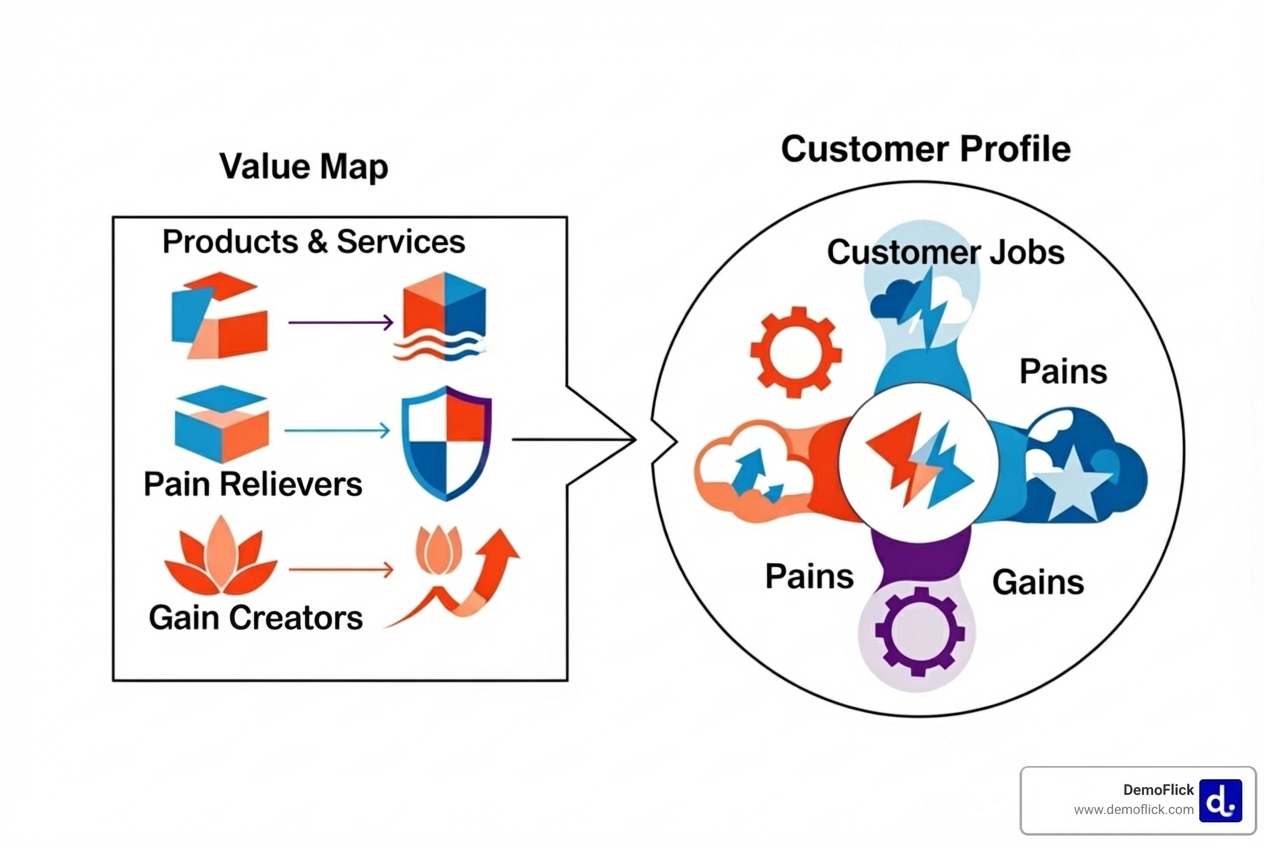
Using a Value Proposition Canvas for Strategic Clarity
To bring together our customer insights and competitive analysis, we often turn to structured tools. The Peter Thomson’s value proposition canvas is an excellent framework that helps us achieve “minimum viable clarity” by visually aligning our offering with customer needs.
The canvas encourages us to explore seven key areas, primarily from the customer’s perspective:
Customer Side (Right Side of Canvas):
- Customer Jobs: What tasks are customers trying to accomplish (functional, social, emotional)?
- Pains: What obstacles, risks, or annoyances do they encounter?
- Gains: What outcomes or benefits do they expect or desire?
Our Product/Service Side (Left Side of Canvas):
- Products & Services: What do we offer to help customers get their jobs done?
- Pain Relievers: How do our products or services alleviate specific customer pains?
- Gain Creators: How do our products or services produce customer gains?
By methodically filling out this canvas, we can see where our offering truly connects with customer desires and where we might need to adjust our product or our messaging. This process ensures our value proposition is grounded in real customer needs and clearly articulates how we address them.
How to Effectively Communicate Value Proposition Across Your Business
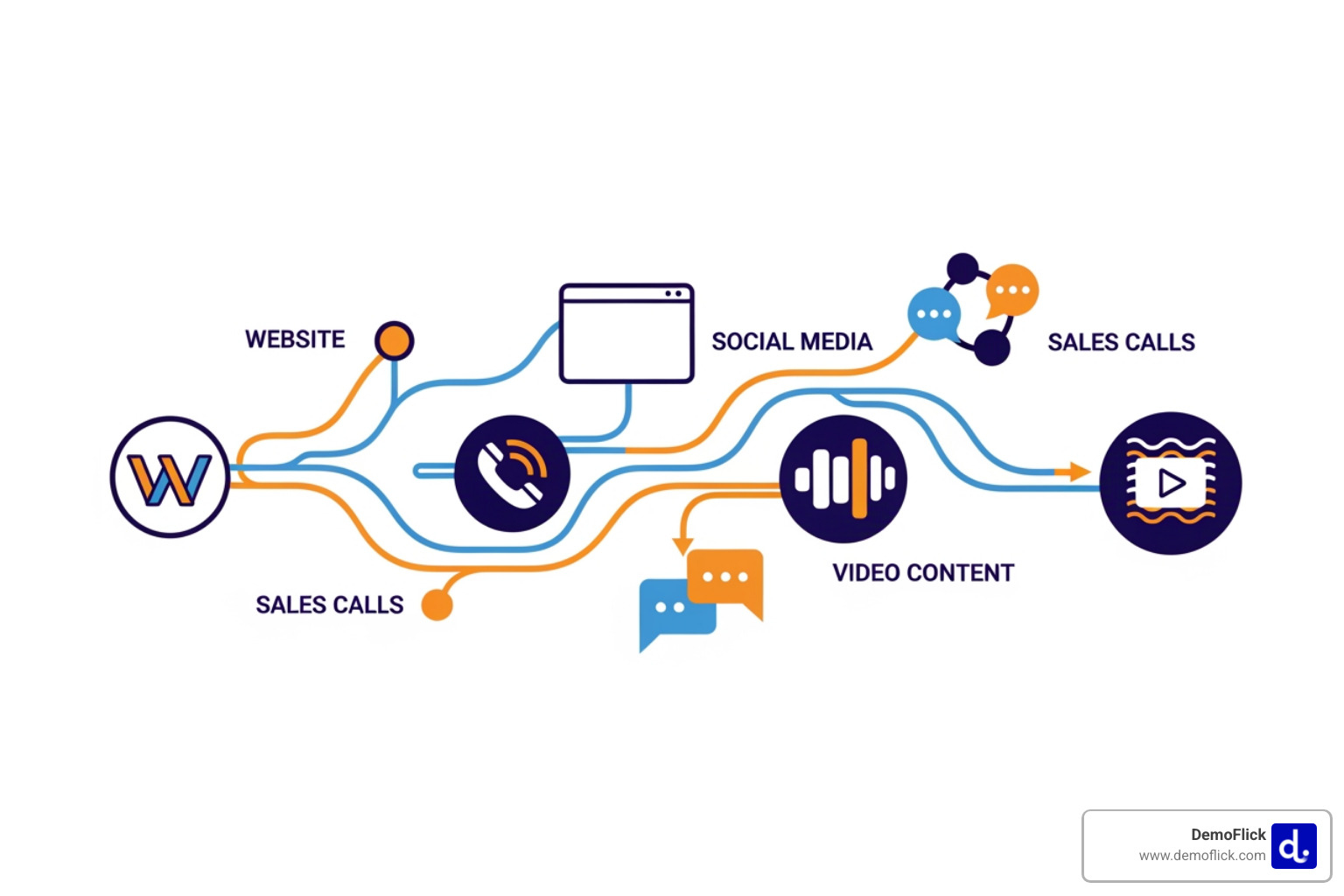
Once we’ve carefully crafted our value proposition, the real work begins: bringing it to life for our audience. Effectively communicating our value isn’t a one time event; it’s an ongoing process that requires clarity, consistency, compelling storytelling, and strategic use of visuals across all customer touchpoints.
Crafting a Clear, Concise, and Memorable Message
In a world saturated with information, brevity and impact are paramount. We have only seconds to capture a visitor’s attention on a landing page. Our message needs to be immediately understandable, free of jargon, and focused on outcomes.
- Simple Language, Not Jargon: Use simple language and avoid jargon. Speak in the customer’s terms, not internal lingo, to prevent confusion and lost sales.
- Outcome Focused: Focus on outcomes, not features. Explain how customers’ businesses will improve, such as saving time or increasing revenue, rather than just listing product capabilities.
- Concise and Memorable: Your core value proposition should be one to three sentences. A powerful headline is crucial, as most people will only read the headline. If it’s enticing, they’ll read more.
- Steve Blank’s Formula: A simple yet effective way to structure our message is “We help (X) do (Y) by doing (Z).” For instance, “We help B2B organizations (X) communicate complex ideas with clarity (Y) by producing strategic corporate and explainer videos (Z).”
By focusing on these principles, we can ensure our message is clear and compelling. For more insights, consider resources like How to Write a Value Proposition Statement That Resonates with Customers and Prospects.
Demonstrating Value with Storytelling, Case Studies, and Testimonials
In the B2B world, trust and credibility are earned. While a clear message is essential, demonstrating that value through real world examples is what truly resonates. This is where storytelling, case studies, and testimonials become invaluable.
- Real World Examples: Use case studies to show real world impact. Demonstrate how our services, like Corporate or Explainer Video Production, solve specific client problems and drive results like team alignment or product adoption.
- Social Proof: Leverage client testimonials for social proof. Peer experiences, especially in video format, build trust and add an authentic, emotional layer to our claims.
- Customer Success Stories: These narratives detail a customer’s challenge, how our solution addressed it, and the measurable results. Stories create an emotional connection, helping potential clients envision their own success.
- Building Trust: By consistently sharing tangible evidence of our impact, we build trust and credibility. This is especially important for B2B decision makers who are often making high stakes investments. Our portfolio is a testament to our ability to deliver on our promises.
- Emotional Connection: Even in B2B, purchasing decisions can be guided by emotions. Stories help tap into these emotional drivers, making our value proposition more relatable and memorable.
By weaving these elements into our communication strategy, we move beyond abstract claims to concrete demonstrations of value.
How to Visually Communicate Value Proposition for Maximum Impact
In today’s visually driven world, how we present our value proposition is almost as important as what we say. For a B2B video production company like DemoFlick, visual communication is our core offering. We specialize in changing complex ideas into clear, engaging visual narratives.
- Corporate Video Production: Our flagship Corporate Video Production service makes your value proposition tangible. These high quality videos build trust, establish credibility, and align messaging for key stakeholders.
- Explainer Video Production: Animated Explainer Videos are essential for complex offerings. They break down intricate ideas into clear, memorable explanations, ensuring your value is understood quickly and accurately.
- SaaS Product Demo Videos: For technology companies, showcasing the product in action is key. Our SaaS product demo videos provide guided walkthroughs that demonstrate real workflows and use cases, making the value of a software solution immediately apparent.
- Infographics and Data Visualization: For data heavy value propositions, infographics can simplify complex statistics and outcomes. They present measurable benefits in an easy to digest format.
- Product Demos (Interactive/Recorded): Beyond videos, interactive demos or recorded walkthroughs allow potential customers to experience the value firsthand. This “show, don’t just tell” approach is incredibly powerful.
At DemoFlick, we believe clarity is a business advantage. Our expertise lies in crafting structured, intentional visual communication that drives specific business actions. By leveraging professional video production, we ensure our value proposition is not only heard but truly seen and understood.
Measure, Refine, and Optimize: Turning Good Messaging into Great Results
Crafting and communicating a value proposition is not a one time task. Markets evolve, customer needs shift, and competitors innovate. To maintain relevance and impact, we must continuously measure the effectiveness of our value proposition, gather feedback, and refine our messaging. This iterative process is key to turning good communication into great results.
Common Mistakes That Dilute Your Value Proposition
Even with the best intentions, it’s easy to fall into traps that undermine our efforts to communicate value proposition. Avoiding these common mistakes is crucial for maintaining clarity and impact:
- Feature Listing Over Benefit Selling: Focus on benefits, not features. Emphasize what the customer achieves with your product, not just what it does.
- Vague Benefits and Hyperbole: Avoid vague hyperbole like “best in class.” Back up all claims with specific, quantifiable proof to be believable.
- Using Jargon and Buzzwords: Overly technical language or trendy buzzwords can alienate potential customers. Your message should be clear and use customer language.
- Ignoring Competitors (Including the Status Quo): A value proposition needs to differentiate us. Failing to acknowledge alternatives means we’re not making a compelling case for why customers should choose us.
- One Size Fits All Messaging: A value proposition should be adaptable. Using the exact same message for every audience segment can dilute its impact.
- Lack of Clarity and Conciseness: If your value proposition is too long or complicated, it won’t be remembered. You have limited seconds to make an impression.
By being mindful of these pitfalls, we can ensure our value proposition remains sharp, relevant, and effective.
A Practical Guide to Testing and Optimizing Your Message
Developing a value proposition is an iterative process. We must continuously test its resonance and optimize our communication based on real world data and feedback. Here’s a practical guide to ensure our message is always hitting the mark:
- A/B Testing on Landing Pages: Use A/B testing on landing pages to compare headlines and statements. Measure which versions lead to higher conversion rates, as you only have a few seconds to capture attention.
- Sales Call Feedback: Create feedback loops with your sales team. They have direct insight into what messaging resonates with customers, what causes confusion, and what objections arise.
- Customer Surveys and Interviews: Directly ask customers if your value proposition makes sense. Do they understand it? Does it address their needs? This qualitative data is invaluable for refining your message.
- Monitor Key Metrics: Track relevant Key Performance Indicators (KPIs) such as conversion rates, customer acquisition costs, and sales cycle length. Changes in these metrics can indicate the effectiveness of your value proposition.
- Message Resonance Tests: Conduct small scale outreach campaigns or focus groups to gauge how well your value proposition is understood and received by your target audience.
- Iterative Refinement: Be prepared to refine your value proposition over time. As markets evolve and your business grows, your message needs to adapt. This iterative process is a continuous part of marketing.
At DemoFlick, our video production process is built on structured feedback cycles and predictable timelines. This disciplined approach reflects our commitment to clarity and optimization, ensuring the final product effectively communicates our clients’ value propositions. By applying similar rigor to our own value proposition, we ensure it remains clear, compelling, and aligned with our business goals.
Frequently Asked Questions about Communicating Value
How do you communicate a complex value proposition without oversimplifying it?
We focus on the core outcome for the customer. We use analogies and structured storytelling, often through Explainer Video Production, to break down complexity into understandable parts. The goal is clarity and impact, not a complete technical breakdown in the initial message.
What’s the best format to present a value proposition to leadership or investors?
Present it as a strategic narrative. Start with the customer problem and market opportunity. Then, deliver your value proposition as the clear solution. Support it with data, a competitive analysis, and a concise visual, such as a one page slide or a short corporate video.
How often should a B2B company revisit its value proposition?
We recommend reviewing our value proposition annually or whenever there is a significant market shift, product update, or change in competitive landscape. The core may remain stable, but the way we communicate it should adapt to stay relevant and impactful for our target audience.
Conclusion: Make Your Value Impossible to Ignore
Mastering how to communicate value proposition is more than a marketing tactic; it’s a strategic imperative for any B2B organization aiming for sustainable growth. Our value proposition serves as a fundamental strategic asset, guiding every aspect of our business from product development to sales conversations. It focuses our efforts, differentiates us from competitors, and ultimately drives our profitability.
The journey involves deep customer understanding, rigorous competitive analysis, and crafting a message that is clear, concise, and outcome focused. It means moving beyond features to highlight tangible benefits, leveraging powerful storytelling, and using strategic visual communication, like the corporate, explainer, and SaaS product demo videos we produce at DemoFlick.
Just as we help B2B organizations in Seattle and globally simplify their complex offerings into clear, structured narratives, we apply the same principles to our own value. The goal is to ensure our value is impossible to ignore. By continuously testing, refining, and adapting our message, we ensure it resonates with our audience and positions us for continued success.
Ready to transform how you communicate your value? Let’s talk about how strategic video can make your message undeniable. Get a Quote today.

DemoFlick
https://www.demoflick.comDemoFlick is a corporate video production agency creating explainer videos, product demos, and brand videos that turn complex ideas into clear, effective stories that drive real business results.