The Art of Connection: How to Craft Compelling Corporate Brand Stories

Why Corporate Brand Storytelling Matters More Than Ever
Corporate brand storytelling is the process of using narrative techniques to communicate a company’s values, mission, and identity to stakeholders. It transforms facts and features into relatable, memorable narratives that build emotional connections and drive business outcomes.
When the average person’s attention span is only eight seconds, capturing stakeholder attention is one of the most difficult challenges facing B2B organizations. Marketing leaders, sales teams, and executives all face the same problem: how do you make your message stick when audiences are bombarded with thousands of brand messages daily?
The answer lies in how humans are wired to process information. Research shows that a fact wrapped in a story is 22 times more memorable than a fact presented alone. When people listened to business pitches, only 5% recalled a statistic, but 63% remembered the stories. This reflects a fundamental truth about human cognition.
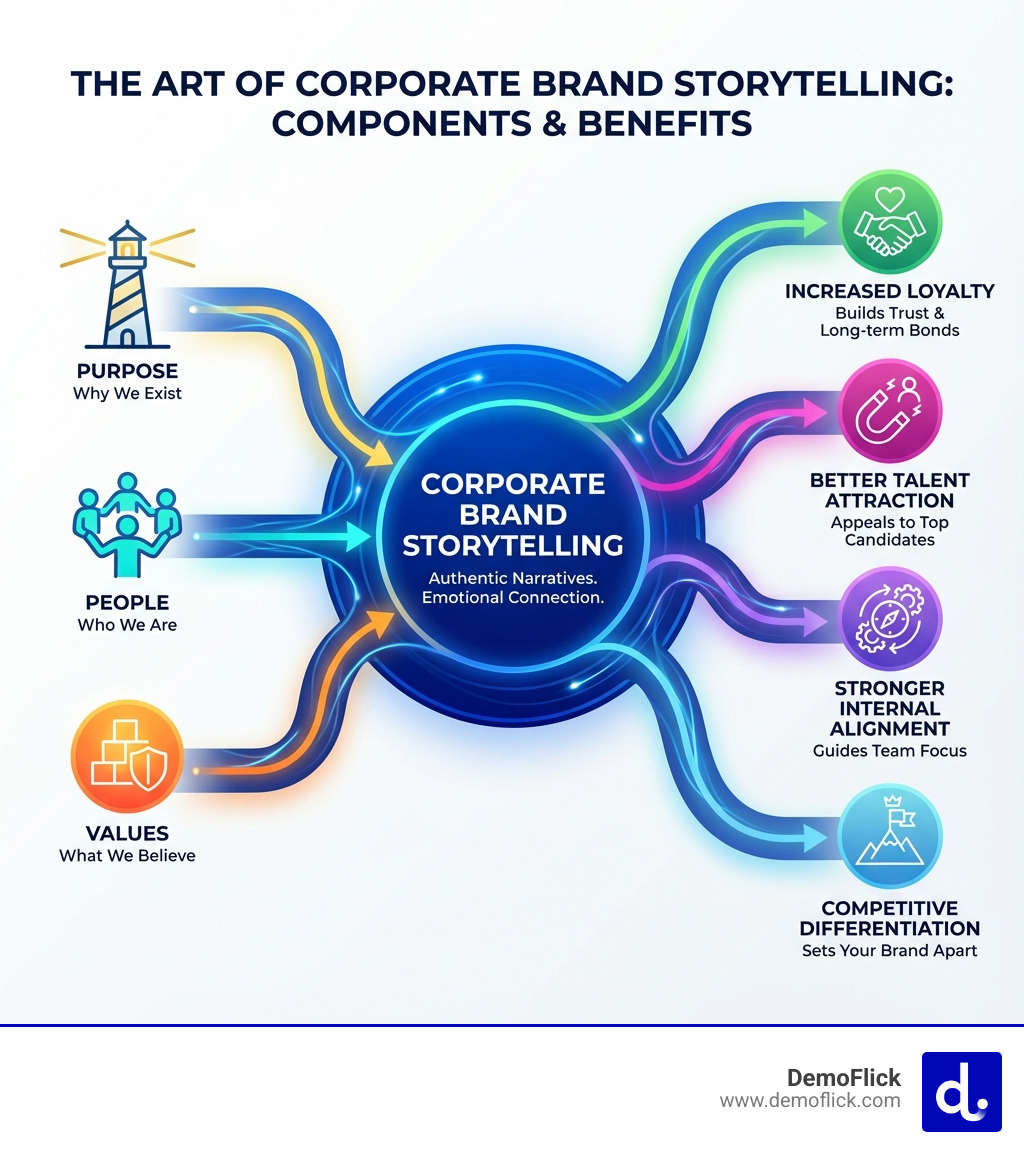
Corporate brand storytelling delivers measurable business value:
- Builds emotional connection – Stories create empathy and trust by showing the human side of your organization
- Increases memorability – Narrative structure makes information up to 22x more likely to be remembered
- Drives loyalty – Companies that actively communicate their purpose see a 20% increase in customer loyalty
- Attracts talent – 64% of consumers find companies that communicate purpose more appealing, including potential employees
- Guides decision making – A clear narrative helps internal teams align on market positioning and strategic choices
- Differentiates from competitors – Authentic stories set you apart in crowded markets where products often look similar
For B2B organizations with complex offerings, storytelling is not a creative luxury but a strategic necessity. When your product requires explanation, your sales cycle is long, and multiple stakeholders need to align on your value proposition, narrative provides the framework that brings clarity to complexity.
What is Corporate Brand Storytelling and Why Is It Essential?

At its heart, corporate brand storytelling is the strategic art of crafting and sharing narratives that embody a company’s essence. It goes beyond mere communication; it’s about making your company’s history, strategy, and values resonate with your audience. This approach brings your brand to life, changing abstract concepts into vivid, relatable experiences.
Defining Corporate Brand Storytelling
Corporate brand storytelling is the intentional use of narrative techniques to convey a brand’s message and values through compelling stories. These aren’t just marketing campaigns; they are strategic communications designed to showcase the human side of your business. By weaving together characters, settings, conflicts, and resolutions, a brand story clarifies identity, fosters emotional connections, and builds trust. It encompasses everything a brand does, from product delivery to customer service, social media interactions, and internal communications.
Unlike traditional advertising, which often focuses on features and benefits, storytelling aims to connect with audiences on a deeper, emotional level. It’s about demonstrating your “why,” your purpose, your beliefs, and the impact you aim to make.
Why Storytelling is More Effective Than Data Alone
While data provides crucial insights, it often struggles to capture hearts and minds in the way a well told story can. The human brain is hardwired for narratives. We have been telling stories for millennia, and our brains have evolved to process them effectively.
As psychologist Jerome Bruner found, we are 22 times more likely to remember a fact when it has been wrapped in a story. This isn’t just about recall; it’s about persuasion and building trust. Stories can change attitudes, counter arguments, and provide a richer perspective than a simple list of features. They allow audiences to relate, empathize, and assign meaning, which is far more powerful than just presenting information.
The Tangible Business Benefits of a Strong Narrative
Implementing a robust corporate brand storytelling strategy yields significant, measurable benefits across your organization:
- Increased Loyalty: When customers connect emotionally with your brand’s narrative, they become more loyal. Research indicates that businesses with compelling brand stories can increase customer loyalty by up to 20%. This emotional connection makes them more likely to stick with you through thick and thin.
- Attracting Talent: A strong narrative doesn’t just appeal to customers; it attracts top talent. Accenture found that 64% of consumers feel that companies that actively communicate their purpose are more appealing than those that do not. This extends to potential employees, who increasingly seek out organizations whose values align with their own.
- Internal Alignment and Engagement: Stories serve as a powerful tool for connecting employees to the vision, mission, and strategy. They make work meaningful, fostering a shared sense of purpose and identity. When employees understand and believe in the company’s story, they are more engaged and productive.
- Guiding Decisions: A clear brand story provides a compass for decision making. It helps leadership and teams evaluate whether changes to products, processes, or partnerships align with the established narrative and brand ethos. This ensures consistency and prevents missteps.
- Competitive Differentiation: In a crowded marketplace, an authentic story sets you apart. It gives your brand a unique voice and personality that competitors cannot easily replicate. This differentiation builds a strong brand image and makes your offerings stand out.
The Core Elements of an Unforgettable Corporate Story

An unforgettable corporate story isn’t just about what you say; it’s about how you say it and what fundamental truths it reveals. Every compelling narrative, whether for a blockbuster movie or a B2B service, shares common structural elements that resonate deeply with audiences. We apply these principles to help our clients craft powerful narratives that simplify complex ideas and drive business outcomes.
The Seven Principles of Effective Storytelling
To craft a truly impactful corporate story, we recommend focusing on seven core principles that guide its development and delivery:
- Purpose: Why does your brand exist? What problem do you solve, and for whom? This is your brand’s “why,” its guiding star.
- People: Who is your story for? Who are the characters—the customers, employees, or founders—who embody your brand’s journey?
- Problem: What challenge or unmet need does your brand address? Conflict is what makes stories exciting and relatable.
- Promise: What unique value or change does your brand offer? This is the resolution your hero seeks.
- Personality: How does your brand express itself? What is its unique voice and tone? This differentiates you.
- Paradox: What tension or unexpected truth does your brand steer or resolve? This adds depth and intrigue.
- Protagonist: Who is the hero of your story? Often, it’s your customer, with your brand acting as the guide.
By deliberately weaving these elements into your narratives, you create stories that are not only memorable but also strategically aligned with your business objectives.
Authenticity: The Foundation of Trust
In today’s transparent world, authenticity isn’t just a buzzword; it’s the bedrock of trust. Modern consumers place a premium on authenticity. They don’t want to feel sold to; they want genuine emotional connections with brands that live their values.
An authentic story is rooted in truth and reflects your company’s actual practices, culture, and ethos. It avoids exaggeration or manipulation, which can quickly erode credibility. For B2B organizations, this means ensuring your brand narrative mirrors your internal operations and external actions.
Consistency between your words and your deeds is paramount. When your story is authentic, it builds a powerful foundation of trust with all stakeholders, from customers to employees and investors.
A Framework for Developing Your Corporate Brand Storytelling Strategy
Developing a robust corporate brand storytelling strategy requires a structured approach. It’s about looking inward to uncover your unique narrative and then strategically sharing it to resonate with your target audiences.
Identifying Your Authentic Narrative
The first step in crafting your corporate story is an internal discovery process. We often find that the most compelling narratives are already embedded within an organization, waiting to be unearthed. This involves:
- Internal Interviews: Speak with founders, long term employees, and leadership. What inspired the company’s inception? What challenges have been overcome? What core beliefs drive the team?
- Customer Feedback: Your customers are the heroes of your story. What problems did they face before finding your solution? What change did they experience? Collect testimonials, case studies, and survey data to understand their journey.
- Core Values: What are the non negotiable principles that guide your business? How do these values manifest in daily operations and customer interactions? Patagonia, for example, built its brand story around its environmental mission and core values.
- Unique History: Every company has a unique journey. What moments define your brand? What pivotal decisions shaped your path? These historical touchpoints can form powerful origin stories.
By engaging in this deep dive, you can identify the authentic elements that will form the backbone of your brand narrative.
Types of Corporate Stories Every Business Should Tell
Once you’ve identified your authentic narrative, you can categorize it into different types of stories to serve various communication goals:
- Origin Stories: These narratives explain how your company began, often highlighting the founder’s vision or a pivotal moment. They establish heritage and authenticity.
- Vision Stories: These communicate your future aspirations, demonstrating where your company is headed and the impact it aims to create. They inspire and align stakeholders around a common goal.
- Customer Hero Stories: These stories place your customer at the center, detailing their challenges and how your product or service helped them achieve success. Your brand becomes the trusted guide in their journey.
- Employee Culture Stories: Showcasing the experiences and values of your employees humanizes your brand and helps attract talent. These stories highlight your company culture and the people who make it thrive.
- Value in Action Stories: These demonstrate how your core values translate into tangible actions and positive impact, whether through corporate social responsibility initiatives or ethical business practices.
Each type of story serves a distinct purpose, contributing to a holistic and compelling corporate brand storytelling strategy.
The Crucial Role of Leadership in Corporate Brand Storytelling
Leadership is not just a participant in corporate brand storytelling; it is the primary architect and chief storyteller. Leaders set the tone, embody the company’s values, and inspire employees and stakeholders through their narratives.
When leaders share personal, authentic stories, they reveal more of themselves, building trust and making their messages more meaningful and relatable. Forbes emphasizes that creating a story to inspire and engage audiences is key for leaders to gain new perspectives or assign meaning to emerging situations.
This internal communication is vital for connecting employees to the vision, mission, and strategy, especially in large B2B organizations where clarity and alignment are critical. Leaders who consistently weave the brand’s narrative into their communications, from town halls to one on one meetings, reinforce the company’s identity and inspire collective action. They don’t just tell stories; they live them, making the corporate brand story an integral part of the organizational culture.
Bringing Your Story to Life with Digital and Video
Your corporate story isn’t limited to words on a page. It can be an immersive, interactive experience that captivates your audience and makes your message stick. This is where digital storytelling and, particularly, video come into their own.
How Digital Storytelling Techniques Improve Corporate Narratives
Digital storytelling is an umbrella term for immersive, interactive content published on the web. It transforms passive consumption into active engagement, allowing audiences to explore narratives in depth. Techniques such as scroll based animation, rich multimedia (combining text, audio, images, and video), and parallax scrolling create dynamic experiences that hold attention far longer than static content.
For example, an NBC News story on highway inequality masterfully mixed statistics with audio, video, and photography, allowing readers to interact with graphics by scrolling to see demographic shifts related to highway construction. This immersive approach can generate an emotional response and encourage further action, making complex B2B topics more accessible and memorable. By leveraging these techniques, we can improve your corporate narratives, ensuring they resonate in a crowded digital landscape.
Using Corporate Video to Build Connection and Clarity
Video is arguably the most powerful medium for corporate brand storytelling today. It combines visuals, sound, and narrative to create deeply engaging experiences that can convey complex ideas with unparalleled clarity and emotional impact. For B2B organizations, corporate video is not just a marketing tool; it’s a strategic asset.
We specialize in crafting high quality, story driven videos for various corporate needs, including:
- Brand Films: These showcase your company’s mission, values, and unique identity, building trust and emotional connection.
- Customer Testimonials: Authentic customer stories highlight the real world impact of your solutions, proving value and building credibility.
- Leadership Messages: Video allows leaders to communicate vision and inspire teams with authenticity and personal connection.
- Explainer Videos: For complex products or services, explainer videos simplify technical concepts into clear, digestible narratives, reducing friction in the buyer journey.
- Product Demos: SaaS product demo videos illustrate real workflows and use cases, accelerating understanding and driving adoption.
These videos establish credibility, build trust, and align messaging across stakeholders. They humanize your brand, making it more approachable and memorable. Learn more about our corporate video production services and how we can help you tell your story with clarity and confidence. For more information on how we translate complex ideas into compelling visuals, you can explore our dedicated page on corporate video production services.
Common Pitfalls to Avoid in Your Storytelling
Even the best intentions can go awry if you fall into common storytelling traps:
- Making the Brand the Hero: Your customer is the protagonist. Your brand is the wise guide that helps them overcome challenges. Focusing too much on your company’s greatness can alienate your audience.
- Inauthenticity: Audiences are savvy. If your story doesn’t align with your actions or values, it will be perceived as disingenuous, eroding trust.
- Inconsistency: A fragmented story, where messaging differs across platforms or departments, weakens your brand identity and confuses your audience.
- Lack of a Clear Message: Every story needs a point. If your narrative is rambling or unclear, it won’t resonate or drive desired actions.
- Ignoring the Audience: A story that doesn’t speak to your audience’s needs, challenges, or aspirations will fall flat. Understand who you’re talking to.
- Being Too Promotional: While storytelling serves business goals, it shouldn’t feel like a sales pitch. Focus on value, emotion, and connection, allowing the narrative to build rapport before any direct promotion.
Examples of Powerful Corporate Storytelling
The best way to understand the power of corporate brand storytelling is to look at brands that do it exceptionally well. These examples demonstrate how authentic narratives can build deep connections and drive significant business results.
The “Mission Driven” Story
Patagonia stands as a prime example of mission driven storytelling. From its inception, the outdoor apparel company has woven its commitment to environmental activism into every fiber of its brand. Founder Yvon Chouinard’s passion for nature and sustainability is the core of its narrative.
Patagonia’s brand story focuses on its environmental mission to protect our planet, brought to life through its core values and initiatives like Worn Wear and 1% for the Planet. In 2011, their famous “Don’t Buy This Jacket” campaign challenged consumerism directly, reinforcing their message of sustainability and responsible consumption.
This bold honesty built immense loyalty, as customers resonated with a brand that prioritized purpose over profit, even transferring company ownership to entities dedicated to fighting the environmental crisis.
The “Customer as Hero” Story
Airbnb excels at placing its customers, the hosts, at the heart of its story. While Airbnb as a platform might not have a naturally exciting story, it intelligently shifted the focus to the diverse experiences of its community.
Airbnb’s Host Stories hub features personal narratives highlighting the varied backgrounds and motivations of its hosts. These stories add a strong human dimension to the brand, creating a sense of excitement, possibility, and connection for potential travelers and hosts alike.
By showcasing how the platform enables individuals to achieve their goals, whether it’s earning extra income or sharing their culture, Airbnb effectively positions itself as the guide empowering the customer’s heroic journey. This approach aligns perfectly with the Storybrand model, where the brand helps solve the stakeholder’s problem.
The “Challenger” Story
Fenty Beauty disrupted the cosmetics industry by challenging existing norms and championing inclusivity from day one. When Rihanna launched Fenty Beauty in 2017, her vision of “Beauty For All” served as a wake up call. It was the first major brand to cover a full range of skin tones, including subtle undertones, forcing competitors to re evaluate their offerings.
This authentic approach is reflected in the brand’s storytelling and its highly consistent identity. Fenty Beauty’s messaging extends not only to skin color and culture but also to diverse body types and gender nonconformity.
By using relatable language, user generated content, and hashtag campaigns, the brand fosters a welcoming and inclusive community. Fenty Beauty’s story isn’t just about makeup; it’s about empowerment and representation, resonating deeply with a generation that values social consciousness and authenticity.
Frequently Asked Questions about Corporate Brand Storytelling
How do we measure the ROI of corporate storytelling?
Measuring the return on investment for storytelling involves tracking brand metrics like awareness and sentiment, engagement metrics such as views and shares, and key business indicators. For B2B companies, this includes lead quality, sales cycle length, and employee retention, which demonstrate the story’s impact on growth and culture.
How can a B2B company with a complex product use storytelling?
B2B companies can simplify complexity by framing stories around the customer’s problem and their successful outcome. Using analogies, case studies, and clear visual narratives helps make technical products relatable. Strategic tools like explainer videos are especially effective at translating complex features into clear customer benefits.
How long does it take to develop a strong corporate story?
Developing a corporate story is an ongoing process, not a one time project. While foundational elements like your mission and core narrative can be established through a focused strategic effort, the strongest stories evolve. They are refined over time through customer feedback, market changes, and consistent application across all business communications.
Conclusion
In the dynamic landscape of modern business, corporate brand storytelling is no longer optional; it is an imperative. It’s the most powerful way to cut through the noise, build meaningful connections, and drive real business outcomes.
From increasing customer loyalty and attracting top talent to guiding strategic decisions and differentiating your brand, the benefits of a compelling narrative are undeniable. At its core, storytelling is about authenticity. It’s about being true to your purpose, your people, and the problems you solve, positioning your customer as the hero of their own journey.
And in an increasingly digital world, video is the unrivaled medium for bringing these stories to life with clarity, confidence, and purpose. We believe that the best stories are not just told; they are lived, shared, and continuously refined.
For B2B organizations seeking to communicate complex ideas and engage high value stakeholders, partnering with experts in corporate video production ensures your story is not only heard but deeply understood and remembered. To learn more about how we can help you craft and share your unique corporate narrative through powerful video, explore our corporate video production process.

DemoFlick
https://www.demoflick.comDemoFlick is a corporate video production agency creating explainer videos, product demos, and brand videos that turn complex ideas into clear, effective stories that drive real business results.