The Art of Smart Business Decisions

Why Business Decision Support Matters Now More Than Ever
Business decision support is the practice of using structured systems and data analysis to help organizations make better, faster, and more informed decisions. Instead of relying solely on instinct or isolated opinions, business decision support leverages technology, data, and analytical models to guide strategic choices across sales, operations, finance, and leadership.
Quick Answer: What You Need to Know About Business Decision Support
- What it is: A combination of technology, data, and analytical methods that help decision makers evaluate options and predict outcomes
- Why it matters: Reduces guesswork, improves accuracy, and enables organizations to respond faster to market changes
- Core components: Database systems, analytical models, and user interfaces that turn raw information into actionable insight
- Key benefit: Organizations using advanced analytics are 2x more likely to outperform competitors
- Primary challenge: Success depends on data quality, user adoption, and clear implementation strategy
You’ve been in that meeting. The one where opinions clash, data gets cherry picked, and the loudest voice often wins. Or worse, the decision gets delayed because no one feels confident enough to commit.
The global market for decision support systems reached $1.6 billion in 2023 and is projected to grow to $2.7 billion by 2030. That growth reflects a fundamental shift in how organizations operate. Companies that effectively leverage data analytics report a 5 to 10 percent increase in profitability, and those using advanced analytics are twice as likely to outperform their competitors.
But here’s the reality: most organizations are drowning in data while starving for clarity. Every system generates reports. Every platform tracks metrics. Yet many teams still struggle to make confident decisions because they lack a structured way to turn information into action.
Business decision support systems bridge that gap. They don’t replace human judgment. They improve it. A well designed DSS helps leadership teams model scenarios, assess risks, forecast trends, and evaluate alternatives with speed and precision that manual analysis simply cannot match.
This guide explains what business decision support is, how it works, and how organizations can implement these systems to make smarter, faster, and more strategic decisions. Whether you’re evaluating software, building internal capabilities, or simply trying to bring more rigor to your planning process, this article provides a practical foundation for moving beyond gut feelings and into data driven clarity.
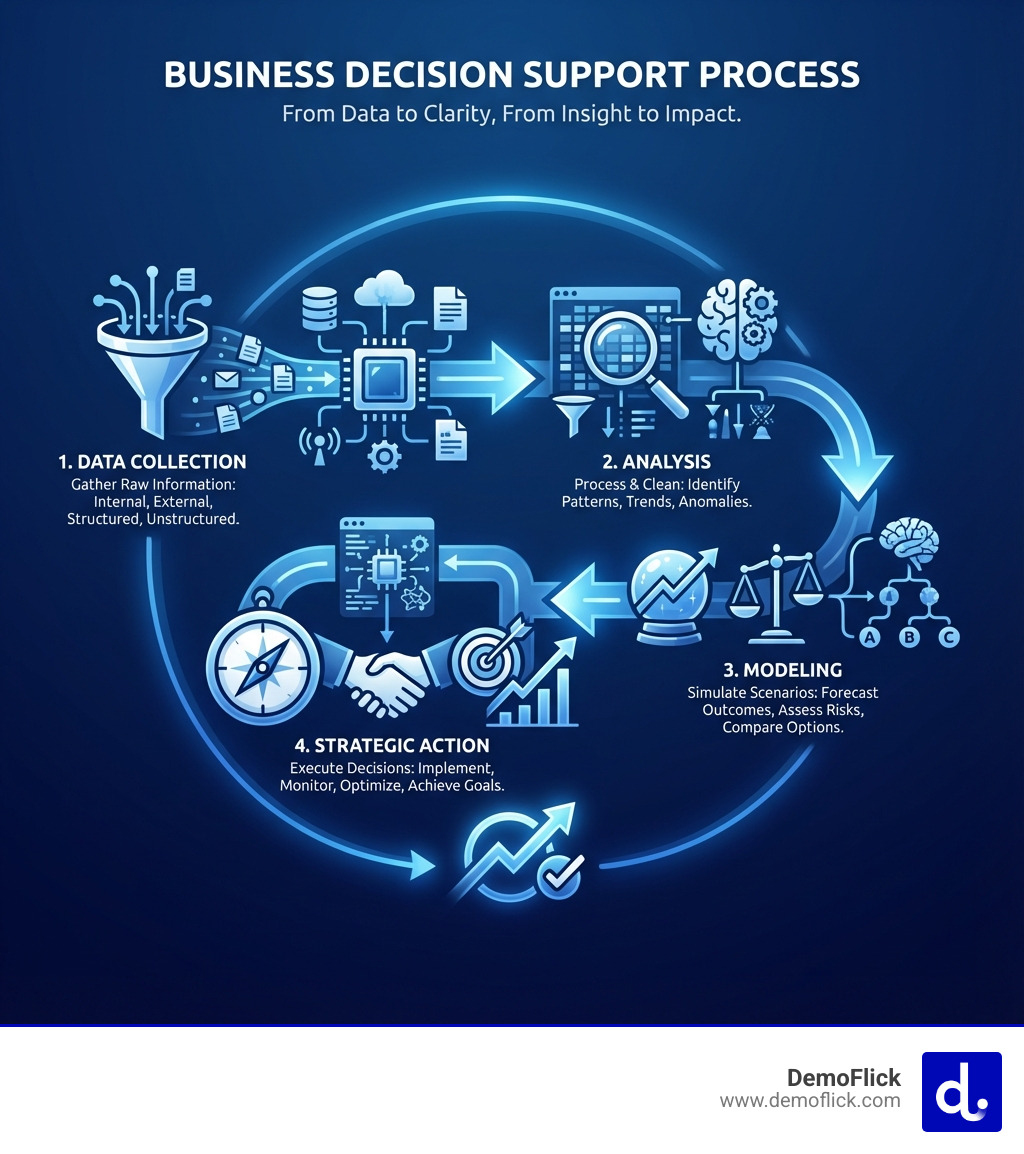
What is a Decision Support System (DSS)?
A Decision Support System (DSS) is a computer based information system designed to support business or organizational decision making activities. It serves all levels of an organization, from management to operations and planning. Essentially, a DSS helps people make decisions about problems that may be rapidly changing and not easily specified in advance—these are typically unstructured or semi structured decision problems.
Unlike traditional information systems, which primarily focus on collecting and processing data for routine operations, a DSS goes a step further. It sifts through and analyzes massive amounts of data, compiling comprehensive information to help solve complex problems. As Peter Keen and Ralph Sprague, early pioneers in the field, highlighted, DSS are aimed at less structured problems, combining analytical techniques with data access and retrieval, all while being easy for non computer proficient people to use. For a deeper dive into the foundational concepts, you might explore A Framework for the Development of Decision Support Systems.
The Core Components of a DSS
At its heart, a DSS relies on three fundamental components that work in harmony to transform raw data into actionable insights.
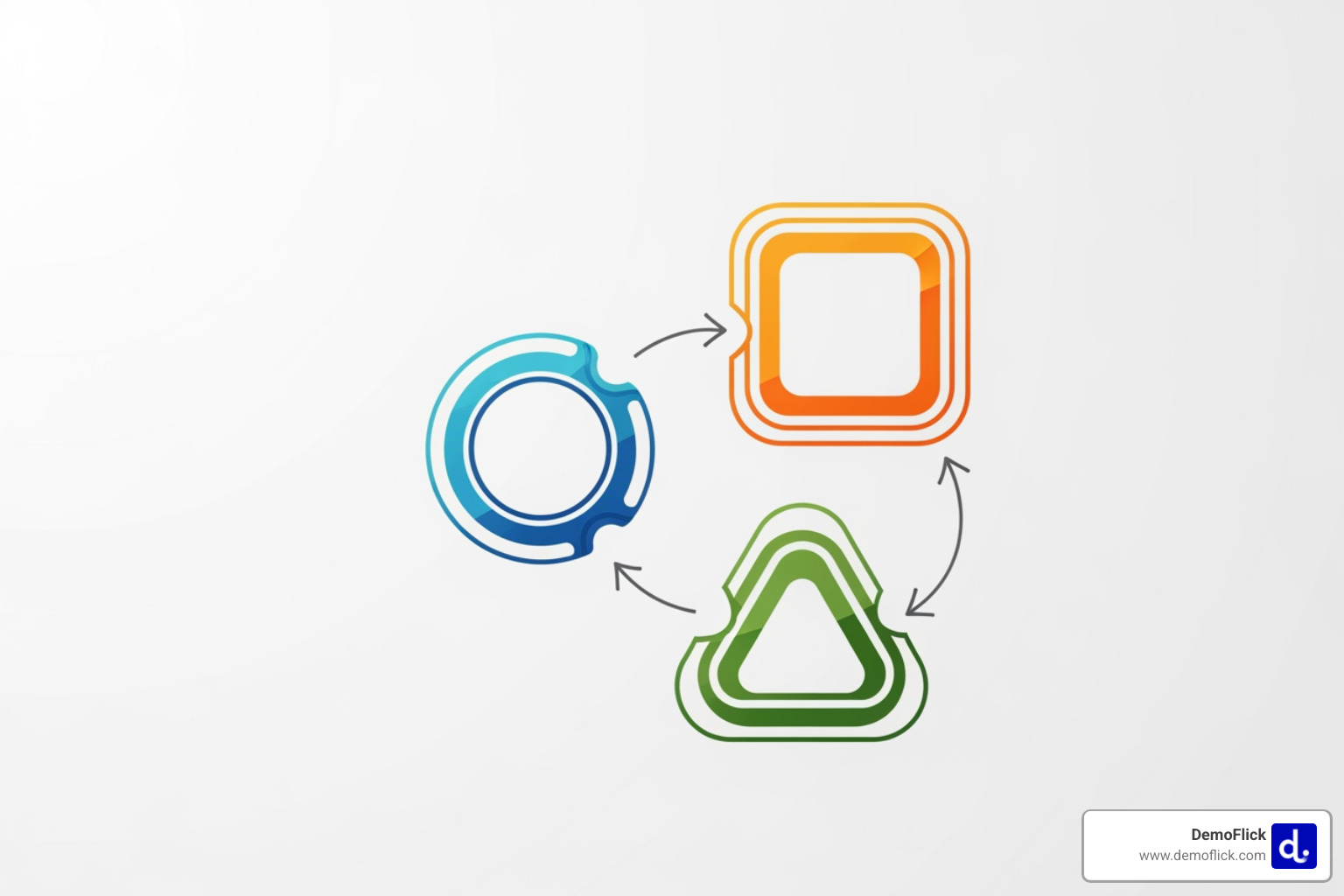
- Database (or Knowledge Base): This is the foundation where all the relevant data resides. It can pull information from internal sources like sales records, inventory figures, and financial statements, as well as external sources like market trends, competitor data, and economic indicators. For a business decision support system to be truly effective, this database needs to be robust, accurate, and easily accessible.
- Model Management System: This component houses a collection of analytical models, statistical tools, and other software that manipulate the data. These models can range from simple statistical analyses to complex optimization algorithms and simulation tools. They are the “brains” of the DSS, allowing users to perform “what if” scenarios and explore potential outcomes.
- User Interface: This is how users interact with the DSS. It needs to be intuitive and user friendly, allowing decision makers to easily input queries, retrieve information, and visualize results without needing deep technical expertise. A well designed interface is crucial for user adoption and ensuring that the powerful capabilities of the DSS are actually used.
How DSS Transforms Raw Data into Action
A DSS transforms raw data into action by systematically processing information through its core components. It begins with comprehensive historical data analysis, looking at past performance indicators such as sales, inventory, and revenue figures. This historical perspective is vital for descriptive analytics, helping us understand “what happened.”
Beyond the rearview mirror, DSS also excels at real time data processing. This means it can continuously ingest and analyze current information, allowing for immediate responses to changing conditions. For a finance department, this could mean tracking stock prices or transaction volumes as they occur, enabling rapid adjustments to investment strategies.
Through advanced algorithms, a DSS can identify subtle pattern identification and robust trend analysis within vast datasets. This moves beyond simple reporting to diagnostic analytics, explaining “why things happened.” Critically, DSS allows for what if analysis, where users can test various scenarios by altering variables to see their potential impact. This predictive capability helps businesses anticipate future trends and make informed, proactive decisions.
Types of Business Decision Support Systems
Decision Support Systems are not a one size fits all solution. They come in various forms, each designed to address different types of problems and leverage different kinds of information. Understanding these categories is key to selecting the right tool for your specific business needs.
| DSS Type | Primary Input | Typical Use Case | Example |
|---|---|---|---|
| Data Driven | Large datasets, internal and external | Analyzing past performance, identifying trends | Sales forecasting, customer segmentation platforms |
| Model Driven | Statistical, financial, optimization models | Predicting outcomes, scenario planning | Budgeting tools, supply chain optimization software |
| Knowledge Driven | Rules, facts, expert knowledge | Problem diagnosis, recommendation systems | Medical diagnostic systems, fraud detection alerts |
| Document Driven | Unstructured text, images, multimedia | Information retrieval, content management | Enterprise search engines, legal document review systems |
| Communication Driven | Collaborative tools, shared workspaces | Group decision making, team coordination | Online meeting platforms with voting features, shared project management dashboards |
| Intelligent | AI, ML algorithms, neural networks | Automated insights, complex pattern recognition | Predictive maintenance, personalized marketing engines |
| Manual | Human expertise, qualitative data | Strategic planning, creative problem solving | SWOT analyses, brainstorming sessions, performance reviews |
| Hybrid | Combination of any of the above | Complex, multi faceted decision making | Clinical DSS combining rules with patient data, risk assessment tools with expert input |

Data Driven and Model Driven DSS
Data driven DSS are perhaps the most common type, focusing on accessing and manipulating large databases. These systems are invaluable for descriptive and diagnostic analytics, helping us understand past performance and the reasons behind it. Business Intelligence (BI) tools are a key sub segment of data driven DSS, offering insights and expanding data understanding, especially with big data. They often manifest as ERP dashboards, providing a comprehensive overview of key performance indicators. A major benefit of BI systems is that they are often less expensive and time intensive to develop than other DSS approaches.
Model driven DSS, on the other hand, emphasize the use of analytical models to simulate situations and predict outcomes. These systems are crucial for predictive analytics, helping businesses anticipate future trends. This includes predictive modeling for forecasting demand or market shifts, optimization models to find the best solution among many alternatives (e.g., in supply chain management), and financial modeling for budgeting and investment decisions. As noted in Using Advanced Analytics to Improve Operational Decisions, these models allow companies to experiment with strategies in a risk free, virtual environment, proving invaluable for operations leaders.
Knowledge, Document, and Communication Driven DSS
Moving beyond raw data and complex models, other DSS types tap into different forms of information and interaction.
Knowledge driven DSS leverage artificial intelligence and expert systems to provide advice or solutions based on a predefined set of rules and facts. Think of a system that diagnoses a problem based on symptoms, much like a human expert would. These systems often use internal knowledge bases to capture and apply specialized expertise.
Document driven DSS focus on managing, retrieving, and analyzing unstructured data like text, images, and videos. These systems are essentially sophisticated search engines that help users find relevant information from a vast repository of documents. They are crucial for tasks like legal research or competitive intelligence.
Communication driven DSS, also known as Group Decision Support Systems (GDSS), facilitate collaboration among multiple decision makers. They provide tools like shared workspaces, video conferencing, and anonymous feedback mechanisms to improve the effectiveness of group meetings and decision processes. For organizations striving for team alignment and clear messaging, enhancing communication through a corporate video production can complement these systems by ensuring everyone shares a common understanding of strategic goals.
The AI Revolution in Business Decision Support
The landscape of business decision support has been dramatically reshaped by the rapid advancements in Artificial Intelligence (AI) and Machine Learning (ML). These technologies have moved DSS beyond mere data aggregation and modeling to truly intelligent systems that can learn, adapt, and even make recommendations.
AI and ML have influenced the evolution of DSS by enabling augmented analytics, where AI and machine learning process and make recommendations on large volumes of data at lightning speed. This means less time spent sifting through reports and more time acting on insights. AI can automate routine analytical tasks, provide deeper insights into customer behavior, and uncover hidden patterns that would be invisible to human analysts. This leads to more efficient operations and strategic growth, all while potentially reducing human bias by relying on empirical data rather than intuition.
The Power of Predictive Analytics in Business Decision Support
One of the most impactful applications of AI in modern DSS is the improvement of predictive analytics. These systems leverage sophisticated algorithms to forecast future trends with a high degree of accuracy by triangulating past events, current parameters, and complex external data.
For businesses, this translates into powerful capabilities:
- Forecasting future trends: From market shifts to technological disruptions, predictive analytics helps anticipate what’s coming.
- Demand planning: Accurately predicting customer demand optimizes inventory levels and supply chain efficiency.
- Customer behavior prediction: Understanding what customers are likely to do next allows for hyper personalized marketing and proactive retention strategies.
- Risk assessment: Identifying potential financial or operational risks before they materialize enables proactive mitigation.
- Proactive strategies: Moving from reactive problem solving to forward looking strategy development.
For SaaS companies with complex features, demonstrating these advanced AI capabilities and their benefits to potential customers requires absolute clarity. A compelling saas product demo video can effectively showcase how predictive analytics within a DSS empowers users, making abstract concepts concrete and actionable.
Real World Applications Across Industries
The versatility of DSS, particularly when powered by AI, means its applications span virtually every business function and industry.
- Sales optimization: DSS can analyze historical sales data, customer demographics, and market trends to predict future sales, identify high value customer segments, and recommend optimal pricing strategies.
- Inventory management: By forecasting demand and tracking supply chain metrics, DSS minimizes carrying costs and reduces stockouts, leading to increased cash flow and profitability.
- Healthcare diagnostics: Clinical decision support systems assist medical professionals in diagnosing diseases and planning treatment by analyzing patient data, medical literature, and best practice guidelines. For a deeper dive into this sector, visit our healthcare page.
- Agricultural crop planning: Farmers use DSS to determine optimal planting times, fertilization schedules, and harvesting strategies by considering weather patterns, soil conditions, and market prices.
- Financial risk analysis: Banks and investment firms leverage DSS to identify risks, spot investment opportunities, and assess creditworthiness by analyzing vast amounts of financial data.
The benefits of using DSS are clear and impactful:
- Improved efficiency by automating data analysis and streamlining decision processes.
- Cost reduction through optimized resource allocation and minimized waste.
- Better decision quality based on comprehensive, data driven insights.
- Risk mitigation by anticipating potential problems and developing proactive strategies.
- Improved customer experience through personalized offerings and responsive service.
- Increased profitability by identifying new opportunities and optimizing operations.
How to Choose and Implement the Right DSS
While the benefits of business decision support are compelling, implementing a DSS is not without its challenges. Organizations must steer several potential pitfalls to ensure success.
One of the primary implementation challenges is the initial cost considerations. Developing or acquiring a sophisticated DSS can be a significant investment, especially for complex, customized systems. Another critical factor is data quality importance. A DSS is only as good as the data it analyzes; poor data quality can lead to flawed insights and bad decisions.
Then there’s the risk of information overload. While DSS provides vast amounts of data, presenting it poorly can overwhelm decision makers rather than empower them. Finally, user adoption is paramount. Even the most advanced system will fail if employees are resistant to change or find the interface too complex. Organizations must focus on clearly outlining your decision process and starting with clear objectives. It’s often best to begin by running a pilot test in one department before fully deploying a DSS across your organization, then scaling gradually as you gain confidence in the value of its insights.
A Practical Framework for Your Business Decision Support Strategy
To effectively choose and implement a DSS, we recommend a structured approach.
- Assessing Needs: Start by clearly defining your business goals and the specific types of decisions you need to support. What problems are you trying to solve? What data do you currently have, and what do you need?
- Evaluating Vendors: Research different DSS providers. Compare their integration capabilities, flexibility, automation features, and user experience. The market for DSS is growing, offering many specialized solutions.
- Ensuring System Integration: Your chosen DSS needs to seamlessly integrate with your existing systems (ERP, CRM, etc.) to create a unified data fabric. This prevents data silos and ensures comprehensive analysis.
- Providing Team Training: Invest in comprehensive training for your team. A DSS is a tool, but its effectiveness depends on the people who use it. Empower your employees to understand and leverage its capabilities.
- Measuring ROI: Establish clear key performance indicators (KPIs) to track the return on investment of your DSS. This helps justify the expenditure and refine your strategy over time.
Looking ahead, future trends in DSS include deeper AI integration, cloud based platforms with native integrations, user friendly interfaces, and large language models for natural interaction. These advancements promise even greater accessibility and power. Throughout this process, the role of clear communication cannot be overstated. An explainer video production can be an invaluable asset, clarifying the new system’s benefits, workflows, and impact for your entire team, ensuring smooth adoption and maximizing the DSS’s potential.
Frequently Asked Questions about Business Decision Support
How does a DSS improve strategic planning for a leadership team?
A DSS improves strategic planning by changing vast amounts of data into actionable insights. It allows leaders to model different scenarios, forecast market trends, and assess risks with greater accuracy. This data driven approach replaces guesswork with evidence, enabling more confident, agile, and effective long term strategies for the entire corporate organization.
What is the first step to implementing a DSS in a small or mid sized business?
The first step is to clearly define the specific business problem you want to solve. Instead of adopting a tool for its own sake, identify a critical, recurring decision that would benefit from data analysis, such as inventory management, sales forecasting, or customer segmentation. This focused objective will guide your selection and ensure the DSS delivers tangible value.
Can a DSS completely replace human decision makers?
No, a DSS is designed to augment, not replace, human judgment. While it can automate analysis and provide powerful recommendations, it lacks the contextual understanding, ethical reasoning, and creativity of a human expert. The most effective approach combines the computational power of a DSS with the strategic oversight and intuition of experienced decision makers.
Conclusion: Achieving Total Clarity in Your Business
In today’s complex business landscape, the ability to make smart, data driven decisions is no longer a luxury—it’s a necessity. Business decision support systems, especially those powered by advanced analytics and AI, provide the framework for achieving this clarity. They empower organizations to move beyond gut feelings, changing raw data into precise, actionable insights that drive efficiency, reduce costs, mitigate risks, and ultimately, foster growth.
The synergy between data clarity and communication clarity is paramount. Just as a robust DSS helps you understand your business with precision, we help you communicate that understanding with impact. At DemoFlick, we believe that clear communication is a strategic advantage. To see how video can clarify your complex software and support your customers, explore our SaaS product demo video services.

DemoFlick
https://www.demoflick.comDemoFlick is a corporate video production agency creating explainer videos, product demos, and brand videos that turn complex ideas into clear, effective stories that drive real business results.