The Power of Pixels: Why Video is Your Internal Comms MVP

Why Internal Video Communications is Critical for Today’s Distributed Workforce
Internal video communications refers to the strategic use of video content to share information, align teams, and build culture within an organization. It includes leadership messages, training materials, company announcements, onboarding content, and employee engagement initiatives delivered through video rather than text based formats like email or documents.
Key components of internal video communications:
- Leadership and executive messaging – Town halls, strategic updates, and announcements from senior leadership
- Training and onboarding – Process walkthroughs, software tutorials, compliance training, and new hire orientations
- Company culture content – Employee spotlights, values videos, event recaps, and team celebrations
- Operational updates – Policy changes, product launches, and cross departmental communications
- Asynchronous collaboration – Video messages that replace meetings and enable teams across time zones to stay aligned
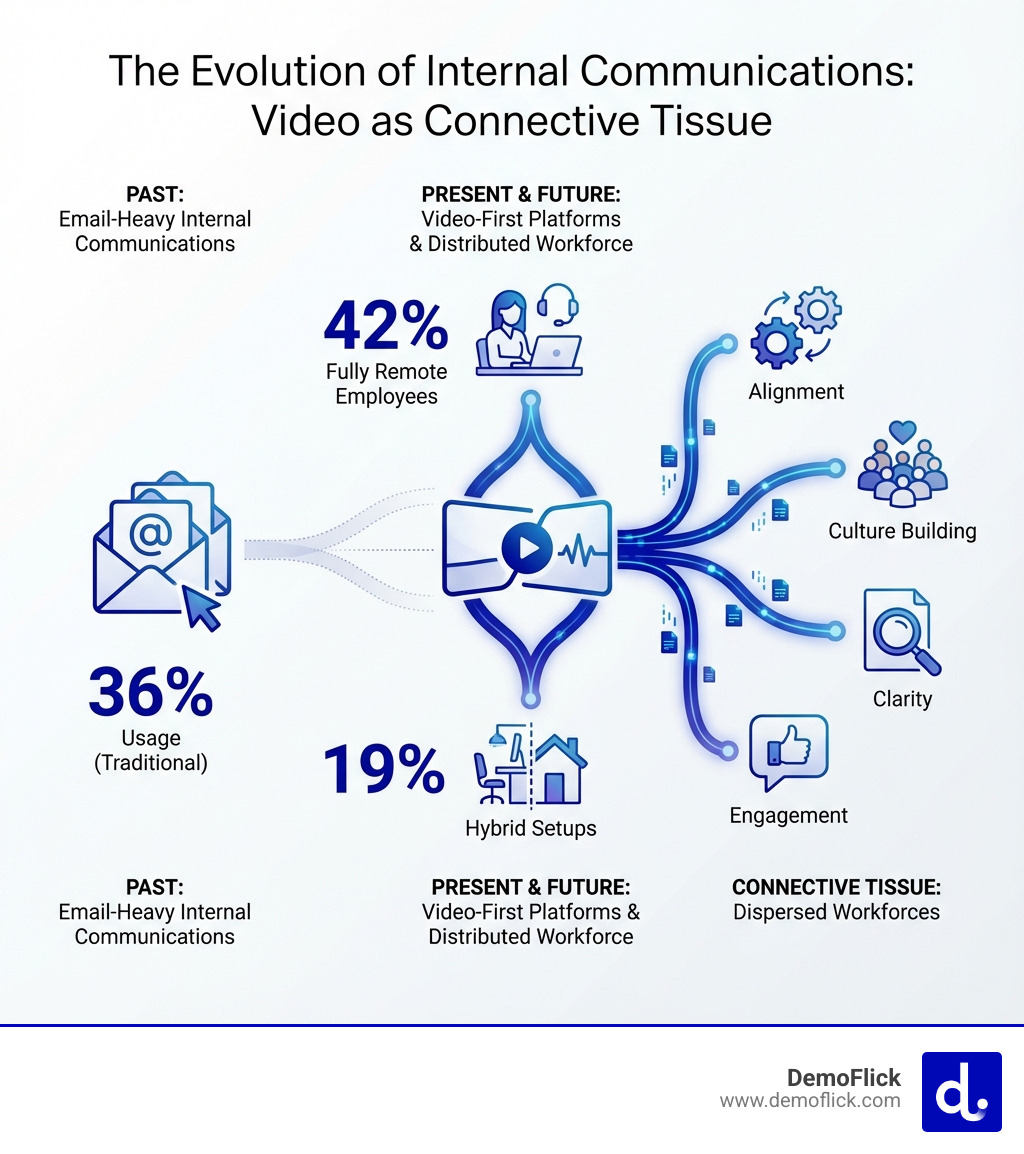
The American workplace has fundamentally changed. With 42% of employees working fully remote and another 19% in hybrid arrangements, the traditional office is no longer the default environment for most organizations. Email usage sits at 36%, but video first platforms like Microsoft Teams and Zoom have become absolutely critical infrastructure.
This shift creates a communication challenge. How do you maintain clarity, alignment, and culture when your team is scattered across cities, time zones, or even continents?
The answer is video.
Video delivers information in a format that feels human, personal, and engaging. It allows leaders to communicate with authenticity, enables trainers to demonstrate complex processes visually, and helps remote employees feel connected to something larger than their home office.
Yet despite these advantages, many organizations still rely on dense emails, static documents, and text heavy intranet posts to communicate with their teams. The result is confusion, disengagement, and a workforce that doesn’t fully understand the company’s goals or priorities.
Internal video communications solves this problem by making information clear, accessible, and memorable. It transforms how organizations share knowledge, build culture, and align teams around a common mission.
This guide explains why video has become essential for internal communications, what types of videos work best for different purposes, and how to build a sustainable video strategy that drives real business outcomes.
The Strategic Advantage: Key Benefits of Video in Corporate Communications
In today’s rapidly moving B2B landscape, clear and consistent communication is not just a preference; it’s a competitive necessity. Video offers a strategic advantage that traditional communication methods simply cannot match. It transforms how information is conveyed, ensuring your message lands with impact and resonates deeply with your team.
One of the most compelling benefits is improved engagement. Research consistently shows that video captures attention more effectively than text, combining visuals, sound, and storytelling to create a captivating experience. In fact, 82% of employees report feeling more engaged with video than with traditional formats. When employees are more engaged, they are more likely to absorb and act on the information presented.
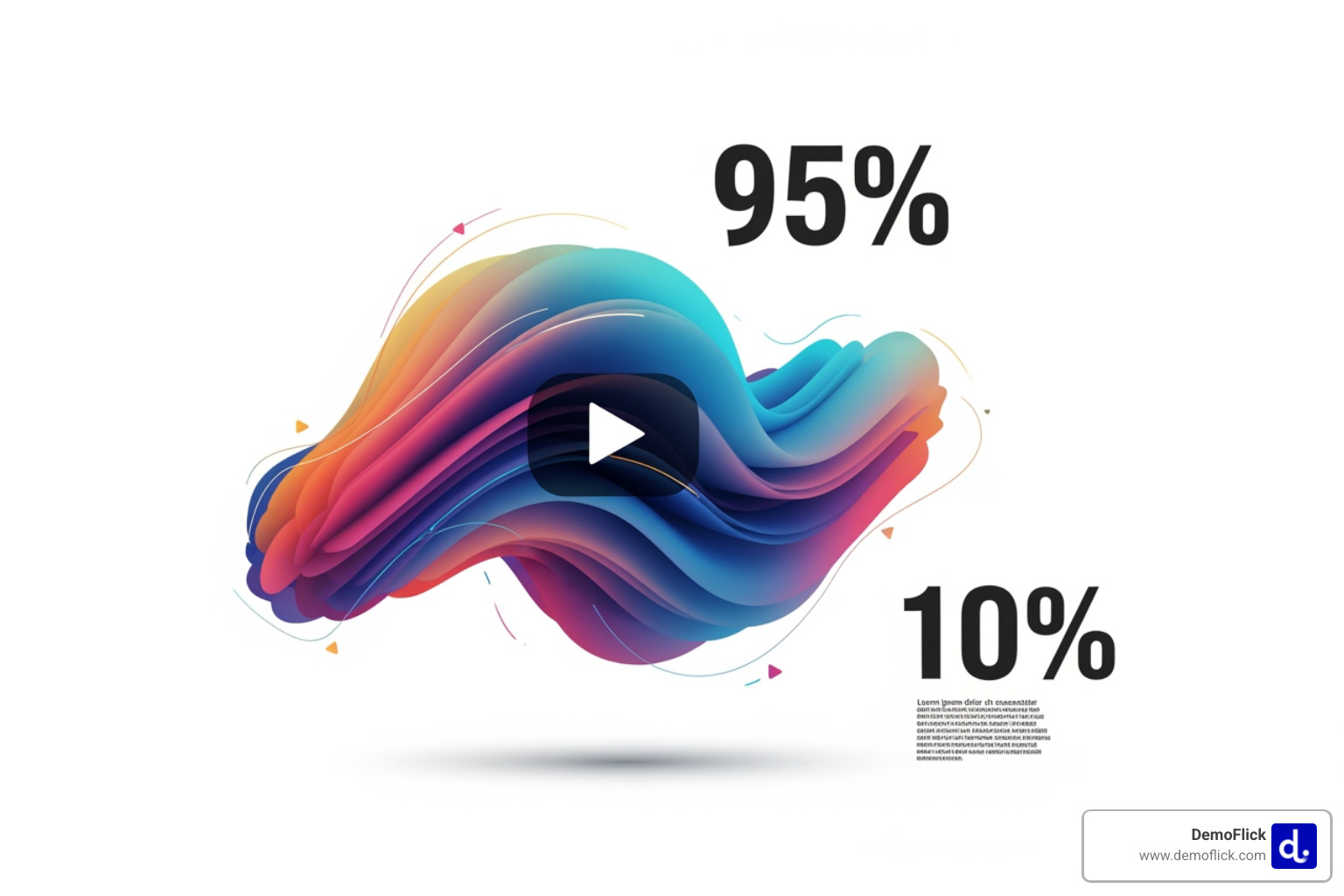
Beyond capturing attention, video significantly improves message retention. Research shows viewers retain an impressive 95% of a message when watching a video, a stark contrast to the mere 10% retained when reading text. This is crucial for complex B2B information, where understanding and recall directly impact performance and decision making. Video ensures that critical details are not just seen, but truly remembered.
Video also brings emotional impact and helps in humanizing leadership. Seeing and hearing leaders speak directly creates a sense of connection and authenticity that text cannot replicate. It allows employees to grasp the tone, conviction, and personality behind the message, fostering trust and a stronger sense of alignment. This is particularly vital in a hybrid or remote work environment where face to face interactions are less frequent.
Furthermore, video excels at simplifying complexity. Whether it’s explaining a new product feature, detailing a complex workflow, or outlining a strategic initiative, video can break down intricate subjects into digestible, visually supported narratives. This clarity is a cornerstone of DemoFlick’s approach, turning complex ideas into clear, structured video narratives that support decision making.
This leads to boosting productivity. When information is clear, employees spend less time seeking clarification and more time executing tasks effectively. Video also supports diverse learning styles, catering to visual, auditory, and kinesthetic learners. This inclusivity ensures that every member of your team can access and understand information in a way that works best for them, fostering a more informed and capable workforce.
A Video for Every Purpose: Types of Internal Communication Videos
Just as a carpenter selects the right tool for the job, successful internal communicators choose the right video type to achieve their specific goals. The versatility of internal video communications allows for a custom approach, ensuring your message is delivered effectively and engagingly.
Leadership and Announcement Videos
These videos are perhaps the most direct way for leadership to connect with the entire organization. Executive messages, town halls, and all hands meetings delivered via video provide a personal touch that builds trust and transparency. They allow leaders to convey strategic updates, celebrate milestones, and address challenges with authenticity. When employees see their leaders speak, it fosters a sense of unity and shared purpose, making even geographically dispersed teams feel more connected.
For example, Google effectively uses video to communicate significant updates to its team, such as advancements in AI integration within their tools. This approach showcases how a major tech company maintains alignment and excitement around its innovations. Similarly, a year end video from a CEO, like that of Fresenius CEO Stephan Sturm, can be a powerful way to reflect on achievements and set the tone for the future, humanizing the leadership team.
Onboarding and Training Videos
Bringing new hires up to speed or teaching existing employees new skills can be a significant challenge, especially with complex B2B products or processes. Onboarding and training videos are invaluable here. They provide new hire welcomes, detailed process walkthroughs, software tutorials, and essential compliance training. By offering a consistent, high quality learning experience, video ensures that every employee receives the same clear message, accelerating their productivity.
HubSpot Academy, for instance, offers a range of courses that exemplify an engaging approach to employee education, often featuring video content. Our Explainer Video Production services are specifically designed to break down complex offerings into clear, memorable explanations, making them perfect for internal training scenarios. Whether it’s clarifying value propositions or explaining technical concepts, video ensures understanding rather than oversimplification.
More info about our Explainer Video Production services
Company Culture and Employee Engagement Videos
Building a strong company culture and fostering employee engagement are continuous efforts. Videos are a powerful medium for showcasing your organization’s values, celebrating employee achievements, and highlighting social responsibility initiatives. These can include values videos, employee spotlights, CSR initiatives, event recaps, and team building content. Such videos inspire employees, reinforce brand commitment, and foster a sense of pride and alignment.
Patagonia’s CSR videos, highlighting their dedication to sustainability, are a prime example of how video can inspire employees and reinforce brand values. Similarly, Dunkin Brands successfully showcased their employee experience in a video, doing a good job of employer branding. These types of videos contribute significantly to a positive workplace environment, making employees feel valued and connected to the company’s mission.

From Concept to Connection: A Framework for Effective Internal Video Communications
Creating impactful internal video communications requires more than just pointing a camera and hitting record. It demands a strategic approach, thoughtful production, and effective distribution. At DemoFlick, we understand that B2B organizations need clarity, structure, and business impact from their video assets.
Step 1: Define Your Strategy and Objectives
Before any video is produced, we emphasize a rigorous findy phase. This begins with a thorough audience analysis: who are your employees, what are their communication preferences, and what information do they truly need? Identifying clear objectives is paramount; are you aiming to inform, train, inspire, or align? Each goal will dictate the video’s content, tone, and format.
Key messaging must be precise, ensuring every word and visual contributes to the overall purpose. Content planning involves outlining the narrative, identifying key takeaways, and deciding on the most effective storytelling approach. Choosing formats—whether it’s a live action leadership message, an animated explainer, or a SaaS product demo—should always align with your objectives. Every video must serve to support your overarching business goals, reducing friction and improving understanding.
Step 2: Best Practices for High Impact Production
Once your strategy is set, the focus shifts to production. For B2B audiences, authenticity over polish is often more effective, though a professional appearance is still critical for credibility. High quality audio is non negotiable; poor sound is a primary reason viewers abandon videos. We prioritize concise scripting, ensuring every message is delivered efficiently and effectively, avoiding jargon or lengthy explanations that dilute the message.
Strong visuals are essential for conveying complex information quickly and engagingly. This could mean clear graphics for an explainer video or authentic shots for a corporate culture piece. Branding consistency, incorporating your company’s colors, logos, and tone, reinforces your brand identity and professionalism. Finally, every video should have a clear call to action, guiding employees on the next steps or desired behavior. Our disciplined, end to end production process is built for B2B teams, ensuring consistency, minimizing revision risk, and aligning stakeholders on messaging.
More info about our production process
Step 3: Distribution and Driving Engagement
Even the best video is ineffective if it doesn’t reach its intended audience. A centralized video hub provides a single, easily accessible location for all your internal video content, making it simple for employees to find and reference materials. Multi channel sharing is key; promote your videos through existing communication channels like email newsletters, intranet integration, and team collaboration platforms (e.g., Microsoft Teams or Slack).
To promote viewership, use intriguing subject lines for emails and include the word “video” to set expectations. Interactive elements, such as clickable chapters, quizzes, or embedded documents, can turn passive viewers into active participants, significantly boosting engagement and retention. For remote teams, asynchronous video updates are especially valuable, allowing team members to get up to speed at their convenience without disruptive interruptions.
Measuring What Matters: Proving the ROI of Your Internal Video Communications Strategy
For any B2B investment, proving return on investment (ROI) is crucial. Internal video communications are no exception. While view counts offer a basic metric, truly understanding the impact requires looking beyond simple numbers to tangible outcomes. We help organizations connect video performance to business goals, demonstrating how video contributes to efficiency, clarity, and employee satisfaction.
Engagement metrics provide deeper insights into how employees interact with your videos. This includes completion rates, indicating how much of a video is watched, and audience feedback gathered through comments or surveys. Knowledge retention quizzes embedded within training videos can directly measure learning effectiveness, showing whether employees absorbed critical information.
The most valuable measure is behavioral change and productivity gains. Did a training video reduce support tickets? Did a leadership message increase alignment on a new strategy? These are the questions that demonstrate real business impact. Poor communication can be incredibly costly; one survey of large companies found that organizations lost an average of $62.4 million per year due to inadequate communication. By contrast, effective video strategies can reduce new hire ramp up time and improve compliance rates.
Overcoming implementation problems often comes down to clear objectives and consistent measurement. By tracking what works and what doesn’t, organizations can continuously refine their video strategy, ensuring it delivers maximum value. A dashboard showing video analytics like engagement and drop off points can provide the insights needed to optimize content and distribution, proving the strategic value of your internal video efforts.
Frequently Asked Questions about Internal Video Communications
How long should an internal communication video be?
The ideal length depends on the goal. Keep announcements and updates under two minutes to maintain attention. For more detailed training or process walkthroughs, aim for three to five minutes. Recorded town halls or all hands meetings can be longer, but should be indexed with chapters for easy navigation.
How much does a professional internal communications video cost?
The cost of a professional video is an investment in clarity and engagement. It varies based on factors like length, style (live action versus animation), and overall complexity. A single video can range significantly, while a comprehensive series for onboarding or training requires a more substantial investment.
How do we ensure confidential information stays secure in internal videos?
Security is paramount. Partnering with a professional production company ensures that sensitive information is protected through non disclosure agreements (NDAs), secure file transfer protocols, and distribution via private, role based access platforms. This prevents confidential data from being exposed publicly.
Conclusion: Making Clarity Your Competitive Advantage
In a distributed work environment, video is no longer a “nice to have” but a strategic necessity for effective internal video communications. It bridges gaps, aligns teams, and builds a resilient company culture. By investing in a clear, consistent video strategy, you empower your workforce and create a distinct competitive advantage. A professional partner like DemoFlick can help you translate complex ideas into clear, impactful videos that drive your business forward.

DemoFlick
https://www.demoflick.comDemoFlick is a corporate video production agency creating explainer videos, product demos, and brand videos that turn complex ideas into clear, effective stories that drive real business results.