Unveiling the Magic: Discover the Leading Animated Film Companies

The Evolution of Animation: From Art Form to Strategic Business Tool
Animated film companies have transformed from small creative studios into global powerhouses that shape both entertainment and business communication. Whether you’re exploring major studios behind beloved franchises or considering how animation can clarify complex ideas in your own organization, understanding the landscape of animation companies reveals both artistic innovation and strategic business value.
Quick Overview of Leading Animated Film Companies:
| Studio Type | Examples | Known For |
|---|---|---|
| Major Corporate Studios | Disney, Pixar, DreamWorks, Sony Pictures Animation | Feature films, franchise development, proprietary technology |
| Japanese Animation | Studio Ghibli, Toei Animation, Sunrise | Distinctive artistic styles, emotional storytelling, global cultural impact |
| Independent & Specialty | LAIKA, Aardman Animations, Cartoon Saloon | Stop-motion, unique visual styles, critically acclaimed narratives |
| Television & Streaming | Nickelodeon Animation, Warner Bros. Animation, Netflix Animation | Series production, consistent output, broad audience reach |
| Service Studios | Contractors and boutique agencies | Project-based work, specialized techniques, corporate clients |
The global animation industry reached $264 billion in 2019 across animation, video games, and visual effects. The 3D animation market alone was valued at $16.64 billion in 2020. These numbers reflect not just entertainment revenue but the growing recognition that animation solves communication challenges across industries.
Animation companies range from massive corporate entities with substantial budgets and in-house intellectual property to agile independent studios specializing in specific techniques or project types. Some create original content and build franchises. Others work on contract, bringing stories to life for clients who need clarity, engagement, and visual impact.
What sets leading animation companies apart is their approach to storytelling. They combine technical excellence with emotional depth, creating characters and narratives that resonate across generations. This same principle applies when B2B organizations use animation to explain complex products, simplify technical processes, or align internal teams around a shared message.
The evolution from hand-drawn animation to advanced CGI has expanded what’s possible, but the core purpose remains unchanged: making ideas clear, memorable, and emotionally engaging.
The Structure of Animated Film Companies: Corporate Studios and Independent Creators
The world of animation is vast, encompassing a diverse array of animated film companies, each with its own unique structure and operational model. Understanding these differences helps us appreciate the varied creative output and the strategic business decisions that drive the industry. Broadly, animation studios can be categorized into two main types: large corporate firms and smaller contractor firms.
Large corporate studios, like Walt Disney Animation Studios or Pixar, are often part of larger entertainment conglomerates. They boast comprehensive structures with specialized units and departments, supported by generous budgets. These studios typically own the rights to their characters and technologies, allowing them to develop extensive franchises and intellectual property. Their focus is often on producing high budget feature films, television series, and streaming content that reaches a global audience.
In contrast, small contractor studios or independent creators are often privately owned with more intimate teams. These studios might specialize in particular animation styles or niche markets, offering greater agility and a more personalized approach to project delivery. They frequently work on a contract basis, creating animated content for clients who may not have in house animation capabilities. This model allows for a wide range of projects, from animated advertisements and short films to explainer videos and multimedia development.
The choice of business model significantly shapes a studio’s creative output and business results. Corporate giants can invest heavily in research and development, pioneering new animation techniques. Smaller studios, however, can be more experimental and responsive, often delivering innovative solutions custom to specific client needs. For us, at DemoFlick, this understanding of varied structures underscores the importance of a clear, process driven approach that ensures high quality outcomes, regardless of the client’s scale or project complexity.
Understanding the Business Models Behind Animated Film Companies
The business models of animated film companies are as varied as the stories they tell. Large corporate entities, such as the Walt Disney Company, often acquire and integrate smaller studios, forming a network of subsidiary animation arms. For example, Disney’s portfolio includes Walt Disney Animation Studios, Pixar, and Lucasfilm Animation, each contributing to a diverse content library. This corporate ownership model allows for massive investment in film production, global distribution networks, and extensive licensing and merchandising opportunities, turning animated characters into worldwide brands.
These large studios often develop and distribute their own intellectual property, building vast franchises that span movies, television shows, video games, and theme park attractions. Their substantial budgets enable them to produce highly polished, technically advanced animated films that consistently attract large audiences. Pixar, for instance, is renowned for its computer generated 3D animations, which are created using its proprietary graphics rendering software, Renderman. This in house technological prowess, combined with compelling storytelling, has earned Pixar an impressive 23 Academy Awards, 10 Golden Globe Awards, and 11 Grammy Awards.
On the other hand, many animation studios operate on a contractor model. These service based studios work for hire, producing animated media for clients in various industries. They might create animated ads, title sequences, or specialized content for other production companies. DeeDee Animation Studio, for example, is acclaimed for its collection of high quality animation projects and works with reputable international studios. This model allows businesses to access top tier animation talent without the overhead of maintaining an in house team. For us, this highlights the value of a flexible, expert partner who can integrate seamlessly into a client’s workflow, delivering specific, high impact animated solutions. Our focus is on making complex ideas clear and actionable, whether through corporate videos, explainer videos, or SaaS product demos, ensuring our clients achieve their communication goals.
The Role of Technology in Modern Animation Studios
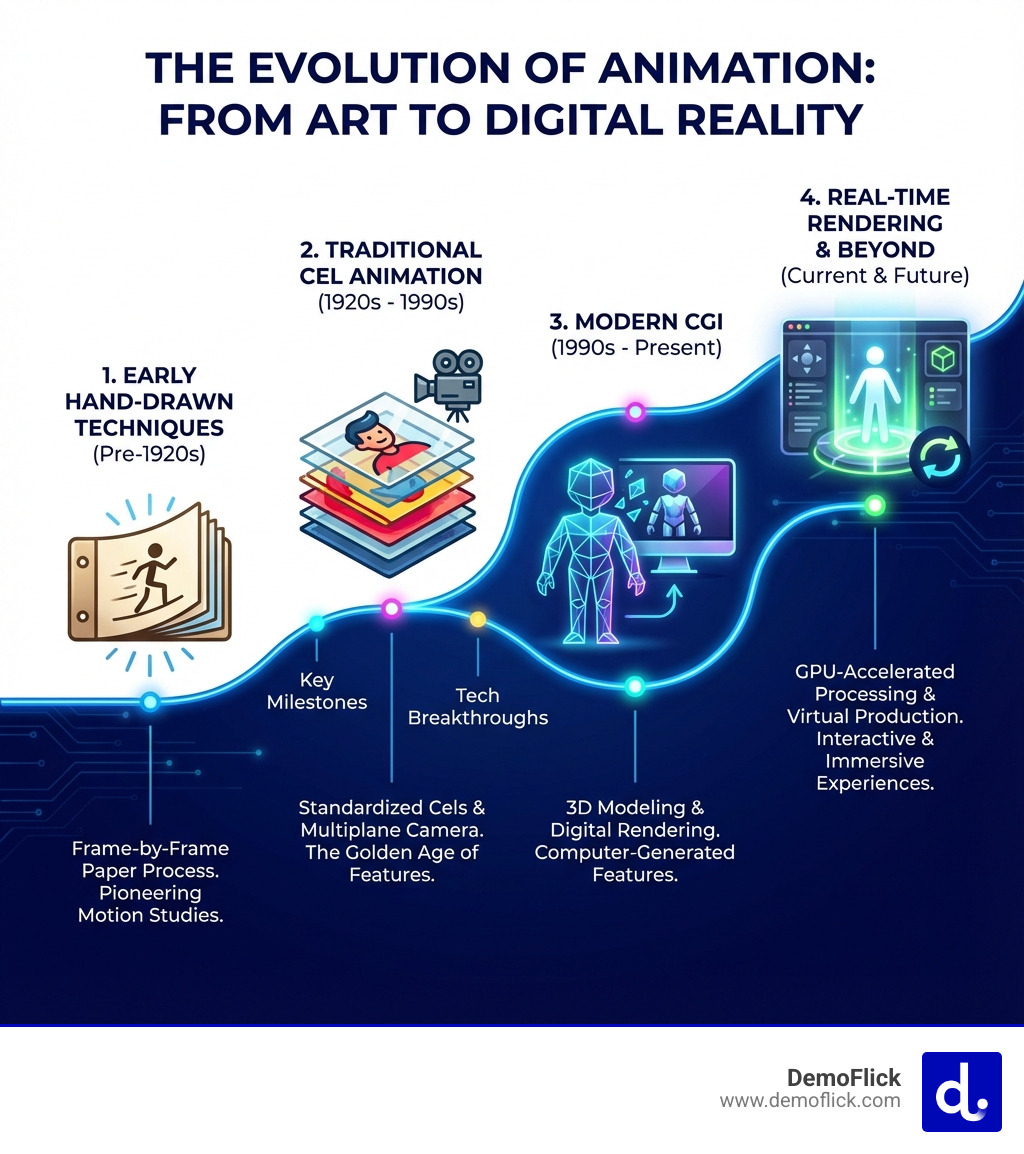
Technology has been a relentless force, continuously reshaping the landscape of animated film companies and their productions. From the very first animated film, Fantasmagorie in 1908, to today’s cutting edge CGI blockbusters, innovation has always been at the heart of animation. The digital revolution, particularly the rise of computer generated imagery (CGI), fundamentally transformed the industry, moving away from labor intensive hand drawn methods to highly sophisticated digital workflows.

Modern animation studios rely on a suite of advanced tools and techniques. We see studios developing proprietary software, like Pixar’s Renderman, to push the boundaries of visual fidelity. DreamWorks Animation Studios, for instance, developed advanced technologies like the Premo character animation system and MoonRay rendering software specifically to increase the realism and detail in their films. These advancements allow for incredibly lifelike characters, intricate environments, and dynamic visual effects that were once unimaginable.
Beyond specialized software, the industry widely adopts technologies such as 3D modeling, rigging, and advanced rendering techniques. Emerging trends like real time rendering engines are significant game changers, drastically reducing production time and increasing flexibility. This allows animators to see changes instantly, accelerating creative iteration and efficiency. Cloud based collaboration platforms also play a crucial role, enabling global teams to work together seamlessly, share assets, and streamline production pipelines. The US animation industry, in particular, has always been defined by its early and enthusiastic adoption of advanced technologies, setting benchmarks for the rest of the world.
For B2B organizations, this technological evolution in animation means greater accessibility and efficiency when seeking animated content. The same sophisticated techniques used in blockbuster films are now leveraged to create compelling corporate videos, explainer videos, and SaaS product demos. We harness these advancements to simplify complex products and services into clear, structured video narratives, ensuring that our clients’ messages are not only understood but also visually engaging and impactful.
The Most Influential Animated Film Companies and Their Business Impact
The most influential animated film companies are not just creators of entertainment; they are cultural institutions and economic powerhouses. These studios have defined eras, pioneered techniques, and built iconic franchises that resonate across generations. Their signature styles and contributions have set global standards for quality and innovation.
Pixar Animation Studios stands as a titan in 3D CGI animation. Their films, including classics like Toy Story, WALL-E, Ratatouille, and Coco, are celebrated for their groundbreaking visuals and profound storytelling. Pixar’s consistent success, marked by an astounding 23 Academy Awards, demonstrates the power of combining technical excellence with deeply emotional narratives that appeal to all ages.
Walt Disney Animation Studios, the progenitor of the animation industry, continues to be one of the most iconic and influential studios worldwide. They pioneered essential techniques such as the 12 principles of animation and invented the multiplane camera. With masterpieces like Frozen, Moana, and Zootopia, Disney has consistently delivered visually stunning films that blend traditional artistry with modern CGI, creating unforgettable characters and stories.
DreamWorks Animation has carved out its own distinct niche with a particular storytelling style often characterized by humor and adventurous narratives. With 41 feature films released as of July 2021, their portfolio includes highly successful franchises like Shrek (with Shrek 2 being a highest grossing animated film at its release) and Kung Fu Panda. DreamWorks has earned numerous accolades, including 3 Academy Awards and 41 Emmy Awards, showcasing their consistent impact.
Illumination Entertainment quickly rose to prominence with its character focused, commercially successful films. Their Despicable Me franchise, featuring the beloved Minions, has achieved immense global box office success, with Despicable Me 2 grossing $970.8 million and Despicable Me 3 crossing the $1 billion mark worldwide. Their ability to create universally appealing characters has made them a significant player.
LAIKA Entertainment stands out for its distinctive stop motion animation, a meticulous and artful process. Films like Coraline, ParaNorman, and Kubo and the Two Strings have garnered critical acclaim, including 6 Academy Award nominations and 10 Annie Awards. LAIKA’s unique blend of practical effects and cutting edge technology creates visually stunning and emotionally resonant stories, often with a spooky fantasy aesthetic.
Aardman Animations, another master of stop motion, particularly Claymation, has won four Oscar wins out of ten nominations for their charming and witty productions like Wallace & Gromit. Their painstaking attention to detail and unique humor have cemented their place as a beloved international studio.
These studios, among others, exemplify how consistent quality, innovative techniques, and powerful storytelling translate into immense cultural and business impact, setting the bar for the entire industry.
The Innovators: Studios Shaping the Animation Industry
The history of animation is a vibrant mix woven with the threads of relentless innovation, pioneered by visionary animated film companies and key figures. The journey began in earnest with French cartoonist Émile Cohl, whose 1908 film Fantasmagorie is often cited as the first animated film. Cohl’s ingenious method of drawing on an illuminated glass plate earned him the title “the father of the animation industry,” marking the glorious rise of animation production.
From these early experiments, foundational studios emerged, constantly pushing artistic and technical boundaries. Walt Disney Animation Studios, under the guidance of Walt Disney and Roy O. Disney, revolutionized animation by developing essential techniques such as the 12 principles of animation and inventing the multiplane camera. These innovations became the standard for traditional animation production and allowed for unprecedented depth and realism in films like Snow White and the Seven Dwarfs (1937), the world’s first full length cartoon animation movie.
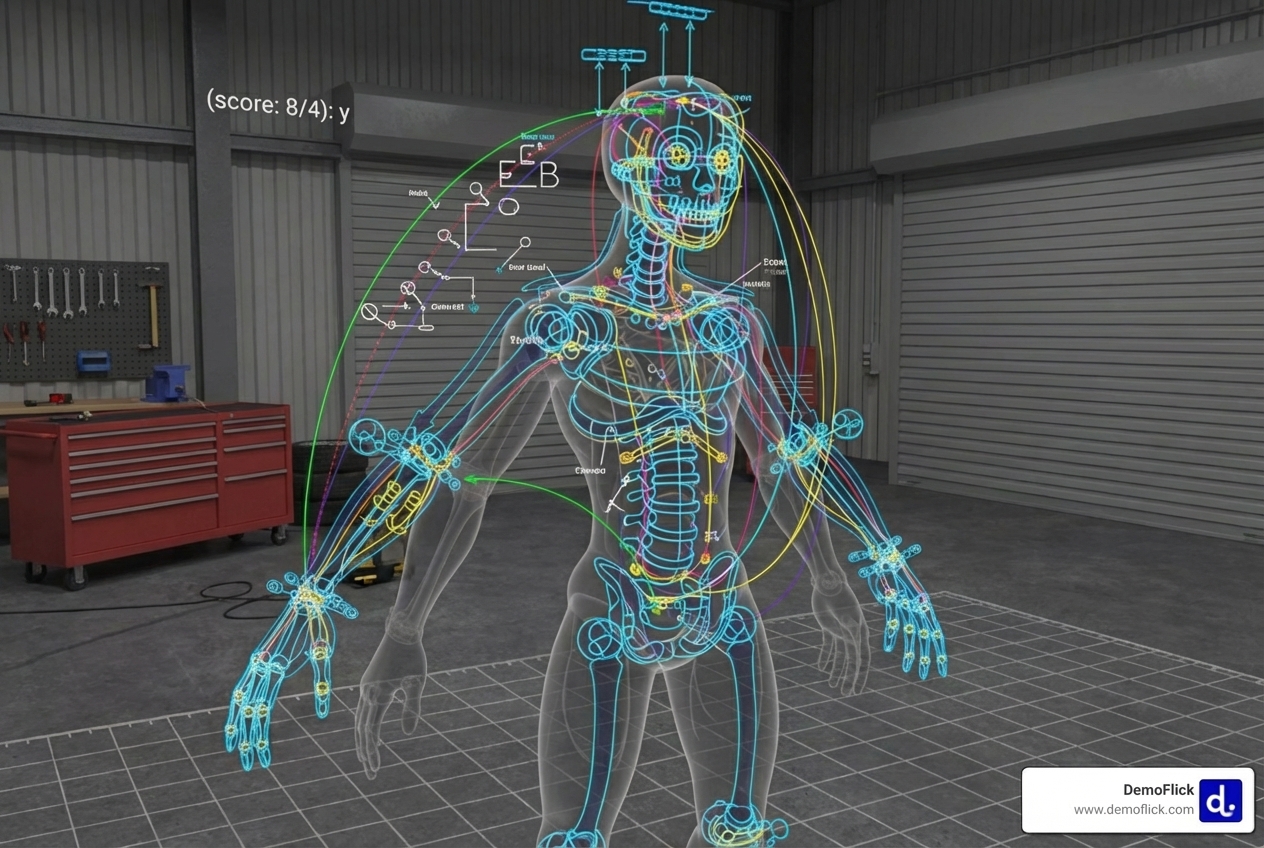
The advent of computer generated imagery (CGI) brought another seismic shift. Pixar Animation Studios, acquired by Steve Jobs, became a pioneer in 3D animated films. Their 1995 release, Toy Story, was not only a critical and commercial success but also the world’s first entirely computer generated feature film, challenging the animation prowess of established studios. Pixar’s commitment to both technical excellence and compelling narratives set a new benchmark for the industry, proving that advanced technology could improve, rather than diminish, emotional storytelling.
These innovators understood that animation was more than just moving pictures; it was a powerful medium for storytelling that required both artistic vision and rigorous technical execution. Their contributions laid the groundwork for the diverse and technologically advanced animation industry we see today, influencing everything from blockbuster films to the sophisticated explainer videos we create for B2B clients. The lessons from these pioneering studios—the importance of clarity, the pursuit of innovation, and the power of emotional connection—remain central to effective visual communication.
The Power of Distinctive Storytelling and Visual Identity
In the competitive world of animated film companies, distinctive storytelling and a strong visual identity are not just artistic preferences; they are strategic business assets. Studios that cultivate a unique style and narrative approach create memorable characters and universes that resonate deeply with audiences, fostering loyalty and driving franchise success.
Consider the diverse approaches: Pixar excels at developing stories that appeal to all ages, blending humor, emotion, and profound themes in films like Up and Finding Nemo. DreamWorks Animation often employs a particular storytelling style that balances comedy with action, as seen in Kung Fu Panda and How To Train Your Dragon. LAIKA Entertainment stands out with its signature stop motion aesthetic, fusing original ideas with practical effects and cutting edge technology to craft visually unique and often spooky fantasy narratives.
Studio Ghibli, from Japan, is a master of distinctive storytelling, with films like Spirited Away and My Neighbor Totoro. Their detailed storytelling and deep emotional resonance have won critical and widespread praise, influencing animation studios globally. In fact, Studio Ghibli is responsible for six out of the top fifteen highest grossing anime films of all time. Their focus on intricate narratives and rich character development creates an unparalleled artistic depth.
More recently, Sony Pictures Animation truly captured everyone’s attention with Spider-Man: Into The Spider-Verse. This film pushed visual boundaries by blending 3D computer animation with traditional hand drawn comic book techniques, using elements like half toning and line works. This innovative style wasn’t just decorative; it improved the storytelling, immersing viewers in a living comic book.
For us, this emphasis on distinctive storytelling and visual identity is a core principle we apply to B2B communication. Just as leading animated film companies use style to create lasting business value, we help organizations clarify complex ideas through precise scripting and intentional visual direction. Whether it’s a corporate video establishing brand authority or an explainer video simplifying technical concepts, our goal is to create narratives that are clear, credible, and visually unique, ensuring our clients’ messages stand out and drive desired actions.
The Global Reach of Animation: Lessons from International Studios
The global animation industry is a rich mix woven with diverse artistic traditions and technological innovations from around the world. While the United States has long been a dominant force with studios like Disney and Pixar, other regions, particularly Japan and South Korea, have made unique and profound contributions, offering valuable lessons in artistic depth and commercial success.
Japan’s animation industry, famously known for anime, has a globally recognized and revered identity. Studios like Studio Ghibli, Toei Animation, and Sunrise Inc. have produced an extraordinary volume of work with distinctive styles and storytelling. Studio Ghibli’s films, such as Spirited Away and Nausicaä of the Valley of the Wind, are celebrated for their intricate narratives, emotional depth, and breathtaking hand drawn aesthetics. Toei Animation, with nearly 300 projects since the 1960s, is responsible for iconic series like Dragon Ball Z and Sailor Moon. Sunrise Inc. carved out a niche by focusing on robot anime, giving us the enduring Gundam franchise. Anime’s distinct appeal transcends generational boundaries, proving that complex, universal stories can achieve global adoration.
South Korea has also emerged as a significant player, transitioning from primarily an outsourcing hub to a creator of original, culturally impactful animated content. With over 500 animation studios, South Korea’s industry is vibrant and growing, producing successes like ‘Beauty Water’ and ‘Baby Shark Dance’. This shift highlights the potential for regions to develop their unique animation voice and contribute meaningfully to the global market.
Meanwhile, in the United Kingdom, Aardman Animations continues to champion the art of stop motion with its unique Claymation style, creating beloved characters like Wallace & Gromit. Their international acclaim demonstrates that specialized techniques can achieve widespread appeal.
These international animated film companies show us that while technology may be universal, cultural perspectives and artistic approaches can create vastly different, yet equally compelling, animated worlds. For us, this global diversity underscores the universal power of visual storytelling. It reinforces our belief that clear, well crafted animation, regardless of its origin or style, can effectively communicate complex messages and connect with diverse audiences, a principle we apply to our B2B video production work for global clients.
The Future of Animation in Business Communication
The future of animation extends far beyond entertainment, increasingly becoming a critical tool in business communication. As animated film companies continue to innovate, the techniques and trends they develop are being adopted by B2B organizations to clarify complex ideas, engage audiences, and drive strategic outcomes.
Emerging trends in the broader animation industry offer exciting possibilities for business applications. Real time rendering, for instance, is a significant game changer, drastically reducing production time and increasing flexibility. This efficiency translates directly into faster turnaround times for corporate videos and product demos. We are also seeing the rise of AI assisted animation, which streamlines workflows and allows for more complex visuals with greater ease.
The perception of animation being solely for children is rapidly dissipating. Animation is increasingly reaching out to grown ups, focusing on mature character development and storytelling. This trend is highly relevant for B2B companies looking to engage decision makers with sophisticated, yet accessible, content. Minimal animation, with its cost effectiveness and speed, is surging in demand from the corporate world for explainer videos and quick educational content.
Animation’s applications in business are expanding rapidly across marketing and advertising, training simulations, and data visualization. Animated explainer videos are particularly effective for clarifying value propositions, explaining technical concepts, introducing new products or services, and educating prospects or internal teams. We specialize in these very areas, leveraging cinematic principles to create impactful content. We believe that animation is changing B2B communication by offering a visually engaging, emotionally connective, and simplifying approach to complex information. You can learn more about how we apply these principles to our explainer video production services.
Key Takeaways for B2B Companies from Leading Animated Film Studios
The success of leading animated film companies offers profound insights for B2B organizations aiming to improve their communication strategies. At the core of every successful animated film is a compelling story, a principle that is equally vital in business. Just as Pixar crafts narratives that resonate with universal themes, B2B companies can simplify complex offerings into clear, structured video narratives that speak to their audience’s challenges and aspirations.
Emotional connection, a hallmark of studios like Walt Disney Animation Studios and Studio Ghibli, is another powerful takeaway. When we build corporate videos or SaaS product demos, our goal isn’t just to inform, but to engage. By creating relatable characters (often representing the customer journey) and presenting solutions to their pain points, we can evoke empathy and drive engagement, making messages memorable and impactful.
The importance of brand identity through visual style, as demonstrated by LAIKA’s distinctive stop motion or the unique aesthetics of anime, cannot be overstated. A consistent, high quality visual style in B2B videos reinforces brand professionalism and credibility. This precision in visual direction ensures that your message is not only clear but also uniquely yours, standing out in a crowded market.
The relentless pursuit of quality and innovation seen across the animation industry teaches us that effective communication is an ongoing process. We apply these cinematic principles to B2B communication, ensuring that our corporate video production, explainer video production, and SaaS product demo videos are not just creative deliverables, but strategic assets designed to reduce friction in the buyer journey, improve understanding, and drive specific actions. We believe animation lifts clarity and impact in business messaging, changing complex ideas into clear, confident, and purposeful communications.
Frequently Asked Questions about Animated Film Companies
How can B2B companies apply storytelling strategies from top animation studios?
Focus on a clear message, create relatable characters (such as your customer), present a challenge, and show a solution. Use visuals to evoke emotion and simplify complex ideas. This approach builds connection and makes your message memorable.
What is the main difference between 2D and 3D animation for business use?
2D animation is ideal for clarity and simplicity, making it effective for explainer videos and infographics. 3D animation adds depth and realism, which is valuable for product showcases, architectural visualizations, and creating a premium brand experience.
Why are more B2B companies choosing animation for marketing and communication?
Animation simplifies complex products or services into clear, engaging narratives. It overcomes industry jargon, creates a consistent brand look, and is more engaging than static content. Animated videos are versatile for websites, social media, sales, and training.
Conclusion
The world of animated film companies offers a compelling narrative of innovation, artistry, and strategic business acumen. From pioneering techniques in the early 20th century to today’s global industry giants and agile independent studios, animation has consistently blended creative vision with technological advancement to tell unforgettable stories. We’ve explored how diverse business models shape creative output, how technology continuously pushes the boundaries of what’s possible, and how the distinctive storytelling of influential studios creates lasting cultural and commercial impact.
The lessons from these leading animation studios are profoundly relevant for B2B organizations. The power of a clear, compelling story, the ability to forge emotional connections, and the strategic importance of a unique visual identity are not just for blockbuster films; they are essential for effective business communication. At DemoFlick, we champion this blend of artistry and strategy, bringing cinematic quality and precision to corporate video production, explainer video production, and SaaS product demo videos. Our commitment is to transform complex ideas into clear, confident, and purposeful video narratives that drive real business results.
We invite you to learn more about our process and how we can help your organization leverage the power of strategic video communication.

DemoFlick
https://www.demoflick.comDemoFlick is a corporate video production agency creating explainer videos, product demos, and brand videos that turn complex ideas into clear, effective stories that drive real business results.