What’s Next for B2B Video Marketing? Trends and Tactics for 2026

Why Video Marketing for B2B Has Become a Strategic Priority
Video marketing for B2B is no longer a nice-to-have or an experimental tactic. It has become a core component of how successful organizations communicate value, educate buyers, and drive revenue. As decision making cycles grow longer and buying committees expand, video serves as the most efficient way to deliver clarity at scale.
Key Components of Effective B2B Video Marketing:
- Clear messaging that addresses specific business problems
- Strategic distribution across owned and shared channels
- Measurable outcomes tied to pipeline and revenue
- Scalable production that supports ongoing business needs
- Brand consistency that reinforces trust and authority
The shift toward video is driven by buyer behavior, not marketing trends. B2B buyers now conduct 67% of their research independently before engaging with sales. They prefer video over text when evaluating complex solutions. 91% of people have watched an explainer video to learn about a product or service, and 88% of marketers report a positive ROI from video.
This change reflects a fundamental reality: written content cannot match video’s ability to simplify technical concepts, demonstrate workflows, or build emotional connection. For B2B organizations selling complex products or services, video is the most effective tool for aligning internal stakeholders, educating prospects, and accelerating the buyer journey.
The organizations seeing the strongest results are those treating video as a strategic asset rather than a one-off campaign. They map video content to specific stages of the buyer journey. They integrate video into sales enablement, product marketing, and customer success. They measure performance against business outcomes, not vanity metrics.
Short form content dominates social platforms, but B2B audiences are willing to invest time in longer videos when the content delivers depth and insight. Educational content now makes up 47% of all business videos, and embedding email sign-up forms within videos drives a 23% conversion rate, outperforming traditional calls to action.
The question is no longer whether to invest in video. It is how to build a structured, scalable approach that supports your organization’s growth objectives and delivers measurable business impact.
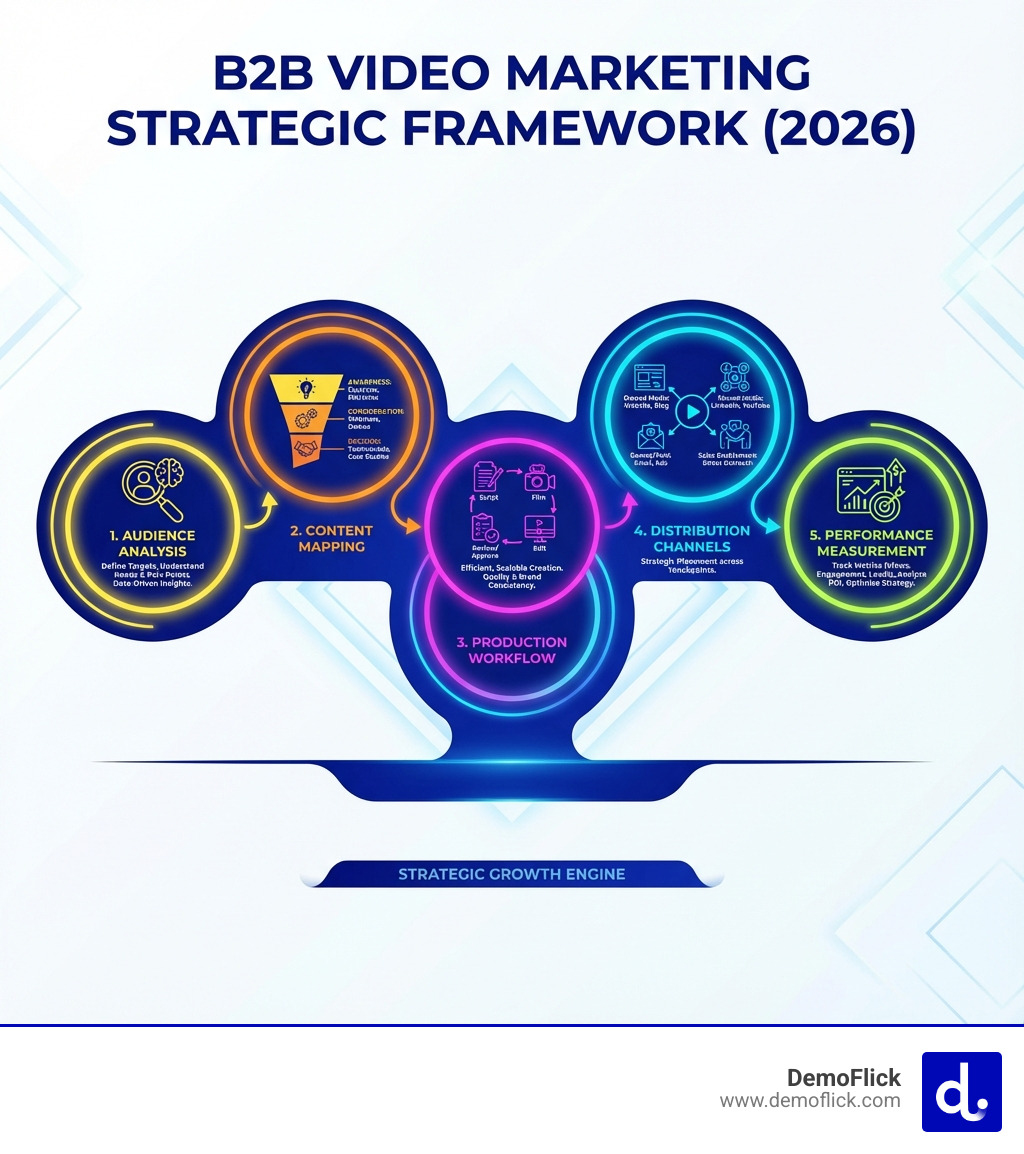
The Strategic Imperative: Key Benefits of Video in B2B Marketing
In the complex world of business to business transactions, where purchasing decisions often involve multiple stakeholders and extensive research, video marketing for B2B stands out as a critical differentiator. It helps us steer intricate sales cycles, build buyer confidence, and ultimately improve lead quality. While B2C video might focus on quick, emotional appeals and entertainment, our B2B approach prioritizes depth, insight, and problem solving.
Video content works exceptionally well for B2B customers who tend to do more research and need to get buy in from seven to eight other team members. This makes video a powerful tool for breaking down complex information and building trust efficiently. Indeed, 62 percent of B2B marketers rate video as the most important format they will use for content this year, far more than email or infographics.
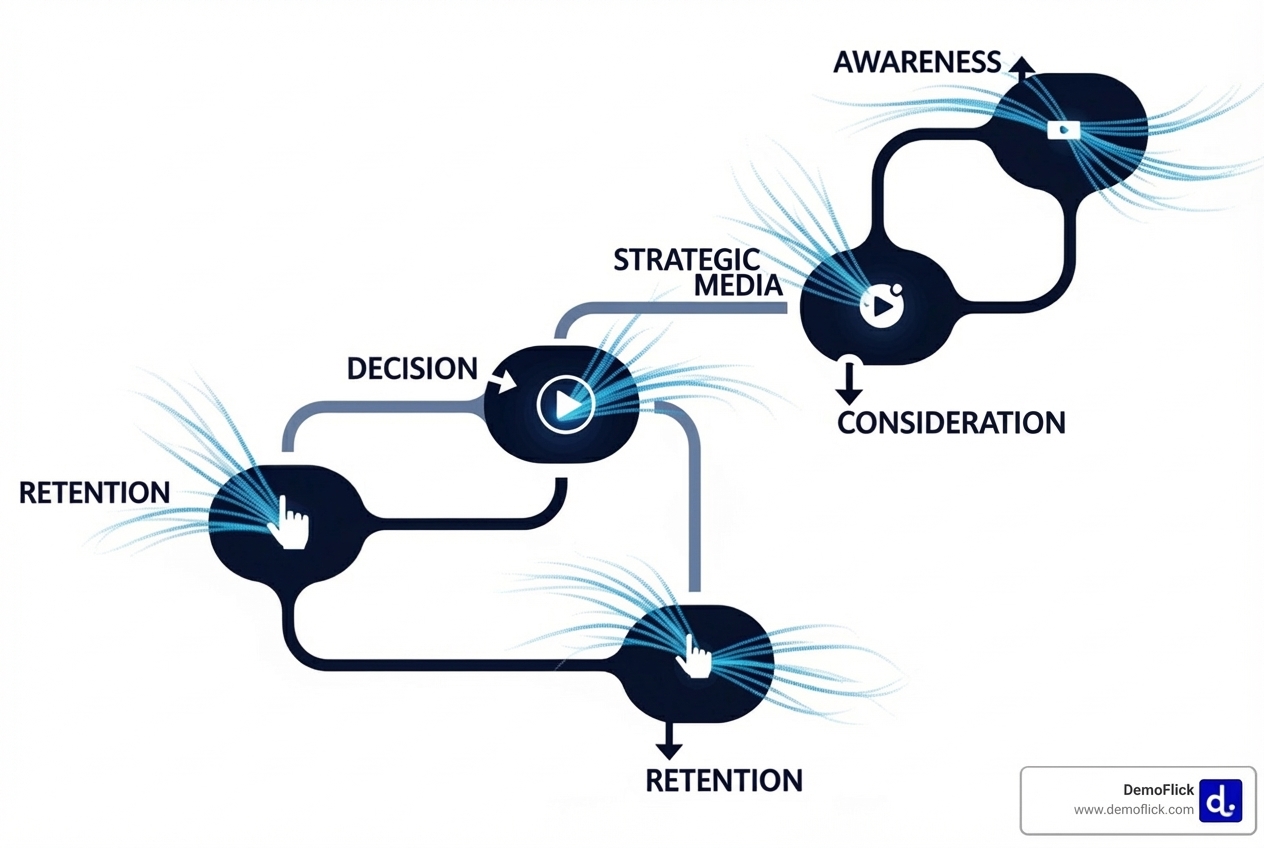
Clarifying Complexity and Accelerating Sales
One of the greatest challenges for B2B companies is effectively communicating the value and functionality of complex products or services. Imagine trying to explain a cloud based CRM or a cybersecurity tool using only text. It is difficult to convey the full breadth of a product without complementary visuals. This is where video marketing for B2B shines.
Videos allow us to visually demonstrate solutions, clarify technical concepts, and showcase workflows in a way that text simply cannot. This visual clarity accelerates product understanding, reducing friction in the sales process. It also helps align decision makers by providing a consistent, easy to digest message. Research shows that 91% of people have watched an explainer video to learn about a product. This preference for video means our buyers can grasp value faster, leading to quicker, more informed purchasing decisions.
Building Trust and Establishing Authority
Trust is the currency of B2B relationships. Video content helps us build that trust by humanizing our brand and demonstrating our expertise. When we share valuable insights, address common pain points, and showcase real world applications, we establish ourselves as thought leaders in our industry.
Emotional connection also plays a surprisingly significant role in B2B buying. Studies show approximately 50% of industry professionals are more inclined to purchase a product or service that uses emotional appeal to demonstrate personal value. Testimonial videos, for instance, offer powerful social proof by featuring happy customers sharing their success stories. This authenticity fosters credibility and allows potential clients to envision similar positive outcomes for their own organizations. When 87% of consumers say video quality impacts their trust in a brand, it underscores the importance of professional production in establishing authority.
Building Your 2026 B2B Video Marketing Strategy
A successful video marketing for B2B strategy isn’t just about creating great videos; it is about creating the right videos for the right audience, at the right time. It requires a structured approach that aligns with our overarching business objectives and delivers measurable results.
To build a robust strategy, we need to consider our business objectives, conduct thorough audience analysis, develop a strong messaging framework, and ensure brand consistency across all our video assets. This systematic approach helps us create content that resonates and drives action.

Step 1: Define Business Goals and KPIs
Before we even think about filming, we need to clearly define what we want our video marketing for B2B efforts to achieve. Are we aiming for lead generation, increased brand awareness, improved sales enablement, or higher conversion rates? Each goal will dictate the type of video we produce, its distribution channels, and the metrics we track.
For instance, if our goal is lead generation, we might focus on gating educational webinars or product demos behind a form, tracking lead submissions and conversion rates. If it is brand awareness, we would prioritize reach, views, and social shares. The key is to tie our video efforts directly to pipeline influence and overall return on investment, ensuring every video contributes to our bottom line.
Step 2: Identify Your Target Audience and Their Pain Points
Understanding our audience is the bedrock of any effective video marketing for B2B strategy. The B2B buying committee is often diverse, including C suite executives, technical evaluators, and end users, each with unique concerns and information needs. We need to define our ideal customer profile. What are their biggest pain points? What challenges are they facing? What kind of solutions are they actively looking for?
By creating detailed buyer personas, we can tailor our video content to speak directly to their specific roles and industry verticals. A C suite executive might prefer a concise, high level overview of business impact, while a technical evaluator will need a more in depth demonstration of features and integrations. We must ask ourselves: who is watching our videos, and what do they care about? More on defining your ideal customer profile can be found here: More on defining your ideal customer profile.
Step 3: Master B2B Storytelling to Drive Action
While B2B content often deals with complex topics, it doesn’t have to be dry. Effective storytelling can transform technical information into engaging, memorable narratives. We need to move beyond mere product descriptions and craft a problem solution narrative that highlights our value proposition.
Authenticity is key here. Our audience wants to see how our solution addresses their real world challenges. We should open videos with attention grabbing hooks, identify and amplify a problem, and then present our solution clearly. Every video should have a clear call to action, guiding viewers on the next step, whether it is downloading a whitepaper, requesting a demo, or contacting our sales team.
Step 4: Integrate Your Brand Identity for Consistency
Our brand identity is more than just a logo; it is the essence of who we are. Consistent brand integration across all our video marketing for B2B content reinforces trust and professionalism. This means adhering to our visual guidelines, maintaining a consistent tone of voice, and thoughtfully incorporating on screen graphics, music, and sound design.
Every element of our video, from the opening bumper to the closing call to action, should reflect our brand. This consistency builds recognition and authority, making our videos instantly identifiable and trustworthy. It also ensures that our message aligns seamlessly with all our other marketing efforts, creating a cohesive brand experience for our audience.
High Impact Video Formats for the Modern B2B Buyer
Choosing the right video format is crucial for effectively engaging our target audience at different stages of their buyer journey. Our video marketing for B2B strategy should include a variety of formats, each designed to address specific needs and provide maximum impact. We map our content to the funnel stages, ensuring we educate and guide our buyers every step of the way.
Foundational Corporate Videos to Build Your Brand
Corporate videos are the backbone of our brand identity. These are not just promotional pieces; they are strategic assets that communicate our core values, mission, and vision. We use them to tell our brand story, showcase our company culture, and share leadership messages. These videos are instrumental in establishing credibility, building trust, and aligning messaging across all stakeholders.
They can also be vital for investor relations and internal communications, ensuring everyone from potential clients to employees understands our purpose and direction. By investing in high quality corporate video production, we strengthen our long term brand authority. For more information about these foundational videos, explore our corporate video production services.
Explainer Videos to Simplify Complex Offerings
For B2B companies with intricate products or services, explainer videos are indispensable. These videos are designed to break down complex offerings into clear, memorable explanations. We use animated explainers to visualize abstract concepts, demonstrate service workflows, and clarify technical details without overwhelming our audience.
Our explainer videos focus on structured storytelling, precise scripting, and intentional visual direction to ensure clarity over mere simplification. They are perfect for introducing new products, educating prospects, or even training internal teams. These videos directly address the buyer’s need for understanding complex solutions quickly. Find out more about how we can simplify your message with our explainer video production services.
SaaS Product Demos that Drive Adoption
In the SaaS world, showing is always better than telling. Product demo videos are essential for driving adoption, reducing friction, and supporting both pre sale and post sale product education. We produce guided product walkthroughs that demonstrate real workflows, features, and use cases in a polished, narrative driven format.
These videos accelerate user onboarding, highlight key functionalities, and illustrate how our software solves specific business problems. They are a powerful tool for product led growth and customer success initiatives, empowering users to get the most out of our offerings. Learn more about how we can showcase your software with our SaaS product demo video services.
Customer Testimonials and Case Studies for Social Proof
Nothing builds trust like hearing directly from satisfied customers. Customer testimonial videos and case studies are incredibly powerful for providing social proof and overcoming objections in the B2B sales cycle. They showcase real world results and highlight how our solutions have positively impacted other businesses.
These videos build credibility by featuring authentic stories of success. They allow potential clients to see themselves in our customers’ shoes, making the benefits of our products tangible and relatable. In fact, 77% of people who watch testimonial videos say that they helped convince them to buy a product or service. By letting our happy clients share their experiences, we provide compelling evidence of our value.
Distribution and Measurement: Maximizing ROI for Video Marketing for B2B
Creating exceptional video content is only half the battle. To truly maximize the return on investment for our video marketing for B2B efforts, we must strategically distribute our videos and carefully measure their performance. This involves carefully selecting the right channels for our audience and tracking key metrics to understand what is working and where we can improve.
Effective content promotion ensures our videos reach the right decision makers, while robust analytics allow us to refine our strategy and demonstrate tangible business impact.
Strategic Distribution for your video marketing for B2B
Our B2B audience resides on specific platforms and interacts with content in particular ways. Therefore, our distribution strategy must be targeted and multi channel.
- LinkedIn: As the ultimate B2B marketing platform, LinkedIn is a prime channel for our video content. Videos on LinkedIn get 5x more engagement than other types of content. We can share thought leadership pieces, corporate updates, and customer success stories here.
- Company Website: Our website serves as a central hub for all our video content. Embedding videos on landing pages, product pages, and our blog not only improves user experience but also significantly improves SEO. Videos on landing pages have been shown to increase conversion rates by over 80%.
- Landing Pages: For specific campaigns, dedicated landing pages with embedded videos can significantly boost conversion rates. By providing focused video content, we can guide prospects towards a clear call to action.
- Email Marketing: Incorporating videos into our email newsletters and marketing campaigns can dramatically increase engagement. Including the word “video” in an email subject line can boost open rates, and video can increase email click through rates by 200 to 300%.
- Sales Outreach Cadences: Personalized video messages can cut through the noise of crowded inboxes. Sales teams can use short, custom videos to introduce themselves, address specific prospect pain points, or provide quick product overviews, adding a human touch to their outreach.
Measuring ROI and Performance of your video marketing for B2B
Demonstrating the return on investment (ROI) of video marketing for B2B is essential for securing continued resources and refining our strategy. We move beyond vanity metrics like simple view counts and focus on indicators that reflect true business impact.
- View through rate (VTR): This metric tells us what percentage of viewers watched our video to completion. It helps us gauge how engaging our content is.
- Click through rate (CTR): For videos with embedded calls to action or links to our website, CTR measures how many viewers took the desired next step.
- Conversion metrics: This is where the rubber meets the road. We track how many leads are generated, how many demos are requested, or how many sales are closed directly attributable to our video efforts. 87% of video marketers say video gives their brand a positive ROI, and nearly eight out of ten marketers feel that video has a direct, positive impact on sales.
- Lead attribution: By integrating our video platforms with CRM and marketing automation systems, we can attribute leads and pipeline influence directly to specific video content. This allows us to see which videos are most effective at driving revenue.
- Audience retention: Analyzing viewer retention graphs shows us exactly where prospects are focusing or losing interest in our videos. This data is invaluable for optimizing future content and ensuring our messages are consistently engaging.
Frequently Asked Questions about B2B Video Marketing
How do we justify the ROI of B2B video to leadership?
We focus on business metrics beyond simple view counts. We track how video influences lead generation, shortens the sales cycle, and increases deal size. We present video as a sales enablement tool that provides measurable lift in conversion rates at key stages of the buyer journey, demonstrating a clear return on investment.
What is the most critical element of a successful B2B video?
The most critical element is a clear, concise script that is built on a deep understanding of the target audience’s primary pain point. High production quality is important, but if the message doesn’t resonate and clearly articulate a solution to a real business problem, the video will fail to drive action.
How long should a B2B marketing video be?
Video length should align with the platform and the video’s purpose. Top of funnel social media videos should be under 60 seconds. Explainer videos and product demos on your website can range from 90 seconds to 3 minutes. B2B audiences will watch longer content if it delivers substantial value and insight.
Conclusion: Gaining a Competitive Edge with Strategic Video
The landscape of B2B communication is constantly evolving, and video marketing for B2B has emerged as a powerful strategic advantage. By leveraging video, we can achieve unparalleled communication clarity, foster deeper trust, and ultimately drive significant business growth.
As a Seattle based B2B video production company, we understand the nuances of communicating complex ideas with confidence and purpose. Our focus is on designing each project to reduce friction in the buyer journey, improve understanding, and drive specific actions. We view corporate video as a strategic asset that supports long term brand authority.
The question is no longer if we should use video, but how we can best integrate it into our strategy for maximum impact. By partnering with a professional production team, we ensure our videos are not just visually appealing, but strategically aligned to our business goals.

DemoFlick
https://www.demoflick.comDemoFlick is a corporate video production agency creating explainer videos, product demos, and brand videos that turn complex ideas into clear, effective stories that drive real business results.